QAPI Project Examples: 8 Nursing Home Templates for Quality Leaders

QAPI Project Examples: 8 Nursing Home Templates for Quality Leaders
Start with these high-impact QAPI projects: falls reduction, pressure ulcer prevention, infection control, medication safety, dining and weight loss, avoidable hospital transfers, staff stability, and resident satisfaction. Each example below pairs an aim with the measures, data sources, and starter interventions you need to draft a charter this week. CMS and AHRQ toolkits back most of these templates.
TL;DR:
- Choose the first project by flagging high risk, high volume, or recurring problems, then weigh resident and staff concerns, available resources, and facility priorities.
- Build each PIP around a charter, interdisciplinary team, root cause analysis, process and outcome measures, and PDSA cycles tested on one unit first.
- Most projects run three to six months; collect data during existing shifts, review fast moving measures weekly, and track slower measures, such as turnover, monthly.
- Choose workflow redesigns, forcing functions, or device based reminders over training alone; examples include post fall huddles and built in turning prompts.
- Share a storyboard with the baseline, aim, timeframe, tested interventions, before and after measures, lessons, and next steps at the QAPI committee meeting.
Table of Contents
- 1. Top QAPI project examples with ready-to-use templates
- 2. How do you prioritize which QAPI project to run first?
- 3. Designing a performance improvement project: charter, team, and PDSA cycles
- 5. A one-page storyboard example for sharing PIP results
- 6. What makes a QAPI project actually stick
- How our platform supports your QAPI projects day to day
- FAQ
- Sources
- Useful U.S. QAPI resources
1. Top QAPI project examples with ready-to-use templates
Every project needs the same bones: a SMART aim, a couple of process measures, one outcome measure, a data source, and interventions sorted by how much they actually change behavior.
- Falls reduction: Aim to cut falls with injury within a few months using measurable targets. Track percentage of residents with completed fall risk assessments within 24 hours of admission and the monthly fall rate. Pull data from incident reports and the Minimum Data Set (MDS). Weak action: remind staff to check bed alarms. Intermediate: add a standardized post-fall huddle. Strong: redesign the environment with low beds and sensor mats for high-risk residents.
- Pressure ulcer prevention: Aim to reduce new facility-acquired ulcers. Measure turning schedule adherence and skin assessment completion. Outcome measure is new ulcers per 100 residents. Data comes from skin audits and MDS. Strong actions include built-in turning reminders on care devices rather than relying on memory.
- Infection control and antimicrobial stewardship: Aim to reduce urinary tract infections tied to unnecessary antibiotic starts. Track hand hygiene audit scores and antibiotic review rates. Outcome measure is infection rate per 1,000 resident days. Source data from infection logs and pharmacy records. Our infection control audit tools article covers this in more depth.
- Medication safety: Aim to reduce medication administration errors. Measure double-check compliance on high-risk drugs and pharmacy reconciliation turnaround. Outcome measure is reported medication errors per month, sourced from incident reports and pharmacy logs.
- Dining and weight loss: Aim to reduce unplanned weight loss. Measure completion of weight audits and dietary consult turnaround. Outcome measure is percentage of residents with unplanned weight loss, tracked through dining logs and MDS.
- Avoidable hospital transfers: Aim to lower preventable transfers using an early-warning tool. Measure use of a standardized assessment before calling 911 and physician notification time. Outcome measure is transfer rate per 1,000 resident days, tracked through transfer logs.
- Staff stability: Aim to reduce turnover among certified nursing assistants. Measure onboarding completion and consistent-assignment rates. Outcome measure is turnover percentage, tracked through HR records.
- Resident satisfaction: Aim to raise satisfaction scores on care responsiveness. Measure call light response time and grievance resolution time. Outcome measure is survey scores, tracked through resident/family feedback logs.
Most of these run on a three to six month timeframe with an interdisciplinary team and a department sponsor; using DISC for healthcare teams can enhance team dynamics and communication for better project outcomes. The common barrier is staff time, so build data collection into shifts that already happen rather than adding a separate task.
Pro Tip: Pick strong or intermediate interventions, like forcing functions or redesigned workflows, over training alone. Training wears off; system changes don’t.

2. How do you prioritize which QAPI project to run first?
Picking the right project matters more than picking a perfect one. Run this checklist in a single planning meeting.
- Pull your facility data and flag issues that are high-risk, high-volume, or problem-prone, using incident reports, survey findings, and MDS trends.
- Ask residents, families, and frontline staff what frustrates them most about current care processes.
- Check feasibility: do you have the staff time, budget, and leadership support to sustain this for several months?
- Match the candidate project to your facility’s broader goals, whether that’s a survey deficiency, a corporate quality target, or a safety concern.
- Use the CMS Prioritizing Worksheet or the Advancing Excellence goal list to sanity-check your choice against recognized priority areas.
- Name a champion, set a start date, and assign a realistic timeline before the meeting ends.
3. Designing a performance improvement project: charter, team, and PDSA cycles
A performance improvement project (PIP) needs a few core artifacts to run well and hold up during survey.
- Charter: State the problem, the aim, the scope, the measures, the timeline, the executive sponsor, and the resources committed.
- Team: Build an interdisciplinary group, include the sponsor, and consider adding a resident or family representative for projects touching daily care.
- Root cause analysis (RCA): Map the process, ask why the problem happens at each step, and separate system causes from individual mistakes before choosing fixes.
- PDSA cycles: Plan a small test, do it on a limited unit or shift, study what happened, and act on what you learned before scaling facility-wide.
- Documentation: Keep a PIP inventory, meeting minutes, and a measurement log so the project is survey-ready at any point.
Pro Tip: Run your first PDSA cycle on one hallway or one shift. A fast, small test teaches you more than a slow, facility-wide rollout.
5. A one-page storyboard example for sharing PIP results
CMS published a nutrition and weight-loss case scenario that shows the format clearly. The team found gaps during RCA, including inconsistent dining assistance and missed weight checks, and responded with interventions like designated Food Plan Leads and revised menu options. The CMS case-study scenario walks through the charter, findings, and measured results in detail.
A one-page storyboard should include:
- The problem statement and baseline measure.
- The aim and timeframe.
- Interventions tested, with a note on which ones stuck.
- Before-and-after measures, shown as a simple chart or graph.
- Lessons learned and the next step for spreading the change.
Share the storyboard at the QAPI committee meeting, then post it where staff on the affected unit can see it.
6. What makes a QAPI project actually stick
Projects stick when frontline staff see the data, not just leadership. Posting run charts where people work and setting realistic intermediate targets, rather than jumping straight to a national benchmark, keeps morale intact during slow months. Mobile checklists and seeded compliance libraries make the daily discipline easier to sustain.
— Philip
How our platform supports your QAPI projects day to day
Running a PIP well means collecting the same data points, week after week, without burning out your team. Our Compliance Suite holds seeded documentation and audit exports your committee can pull straight into a storyboard, while My Tasks turns daily checks like weight audits or turning schedules into a few taps on a phone already in a caregiver’s pocket.
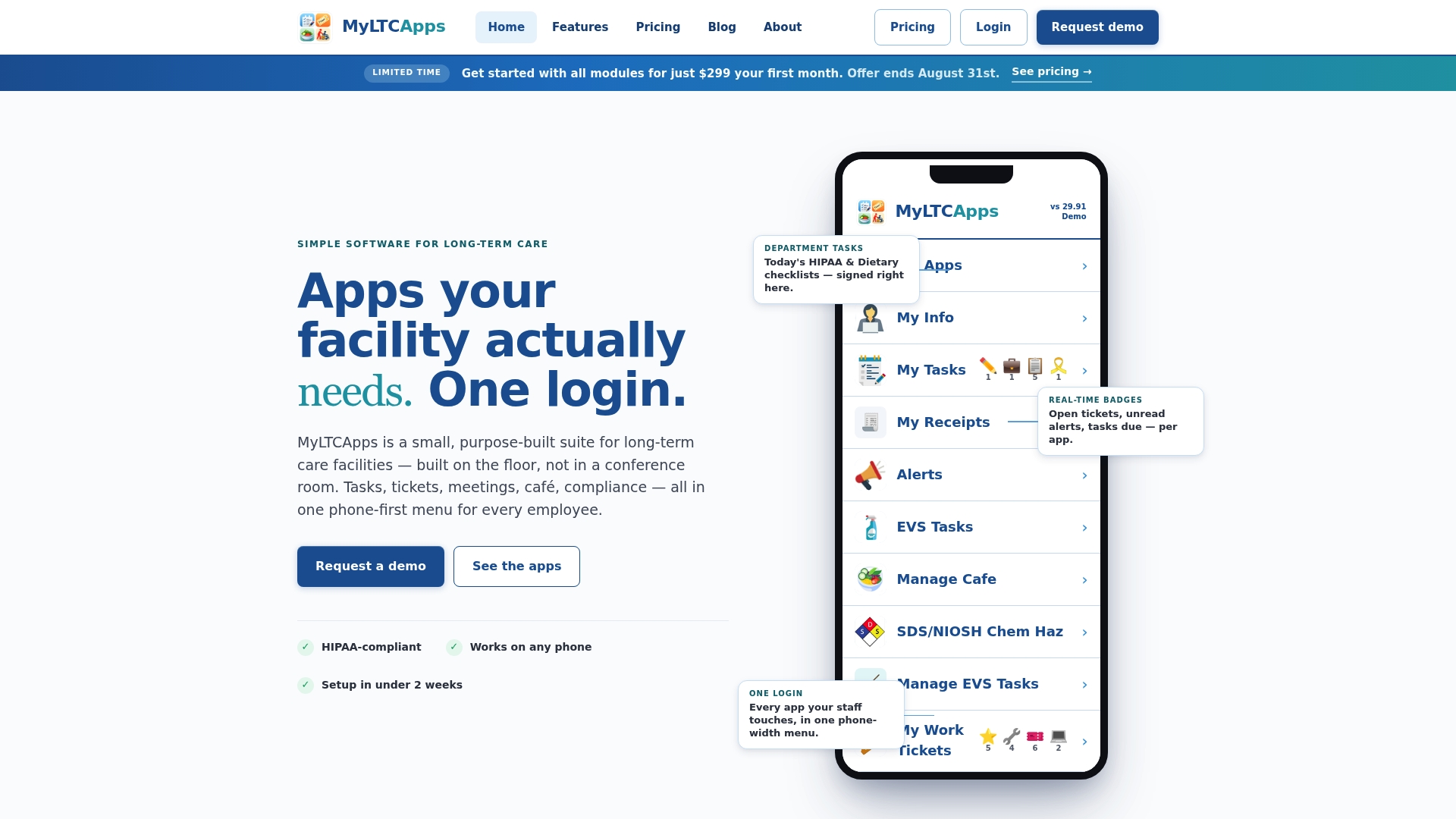
- My Work Tickets routes maintenance issues tied to falls or infection control projects, like broken grab bars or flooring repairs, straight to the right person.
- Alerts & SMS notifies the care team the moment a measure slips outside your target range.
- Meeting Sign-In logs QAPI committee attendance and in-service training automatically, so your minutes are ready whenever a surveyor asks.
Pulling these pieces into one phone-first menu means less time chasing paperwork and more time acting on what the data shows. See how the modules fit together on our features page, or check pricing to find the plan that matches your facility’s size.
FAQ
What are examples of QAPI projects?
Common examples include falls reduction, pressure ulcer prevention, infection control, medication safety, dining and weight-loss management, reducing avoidable hospital transfers, staff stability, and resident satisfaction. Each pairs a SMART aim with process and outcome measures pulled from sources like the MDS, incident reports, or pharmacy logs.
Can you provide some examples of quality improvement projects?
Quality improvement projects in long-term care often target a specific, measurable problem, such as cutting medication errors through double-check compliance or lowering preventable hospital transfers with a standardized early-warning assessment. Each uses PDSA cycles to test a small change before scaling it facility-wide.
Can you give me some examples of healthcare projects?
Beyond long-term care, healthcare quality projects commonly address hand hygiene compliance, readmission reduction, and medication reconciliation accuracy. The structure mirrors a nursing home PIP: define the problem, set an aim, choose measures, and run small tests of change before a full rollout.
How do I write a QAPI plan?
Start with a charter that names the problem, the aim, the scope, the measures, the timeline, and the sponsor. Build an interdisciplinary team, run a root cause analysis, test changes through PDSA cycles, and document everything in a PIP inventory so the plan holds up to survey review.
Sources
Process measures tell you whether staff are doing the new steps. Outcome measures tell you whether residents are better off. You need both.
- AHRQ On-Time prevention program
- Resource Guide for Quality Improvement Tools — CMS
- CMS case-study scenarios (nutrition/weight loss example)
Pull this data from the MDS, incident reports, pharmacy logs, and dining or weight audits, reviewing weekly for fast-moving measures like falls and monthly for slower ones like turnover. The AHRQ On-Time program provides report specifications focused on pressure ulcers, pressure ulcer healing, preventable hospitalizations, and falls, which helps standardize how facilities pull and display this data.
A run chart posted in the staff break room does more for momentum than a quarterly report ever will, because it turns compliance numbers into something a nursing assistant can glance at between rounds.
Useful U.S. QAPI resources
- AHRQ On-Time prevention program: report specs for falls, pressure ulcers, and preventable hospitalizations.
- CMS Resource Guide for Quality Improvement Tools: PIP checklists and change packages.
- CMS case-study scenarios: worked nutrition PIP example.
- QAPI at a Glance, AHRQ: stepwise implementation guide.