Generator Fuel Schedule Mapped to NFPA/OSHA for Facility Managers

Generator Fuel Schedule Mapped to NFPA/OSHA for Facility Managers
Test fuel on a set schedule, keep tanks topped off, put monitoring and alerts on the storage system, and follow OSHA backed refueling steps. These four habits, anchored to NFPA 110 and OSHA guidance, keep standby generators ready. Expect lab testing roughly every six months, water checks more often, and annual stability testing for fuel held longer than a year.
TL;DR:
- Regular water and sediment testing every six months is necessary to catch microbial growth and contamination before they cause mechanical failures.
- Maintaining tanks at full capacity reduces condensation, microbial growth, and sediment buildup, especially in outdoor tanks exposed to temperature fluctuations.
- Automated monitoring systems should track fuel levels, potential leaks, and alert operators to anomalies to prevent unnoticed issues and streamline maintenance.
- Fuel stability testing is required annually for fuels stored longer than 12 months, with remediation retesting to confirm fuel condition improvement.
- Following OSHA and NFPA 110 guidelines for refueling safety, tank design, and documentation minimizes operational, compliance, and environmental risks.
Table of Contents
- Why generator fuel management matters for reliability and compliance
- Standards and testing requirements: what to test and how often
- Fuel storage and tank maintenance: design and periodic care
- Fuel quality monitoring and a practical testing schedule
- Monitoring technology and remote fuel sensing options
- Safe refueling and handling procedures
- Operational practices: inventory, turnover, polishing, load testing
- Implementation checklist and sample schedule to adopt this month
- Practitioner perspective: common pitfalls and pragmatic fixes
- Automate the checks so nothing slips through
- Sources
- FAQ
Why generator fuel management matters for reliability and compliance
Diesel does not sit quietly in a tank. Microbial growth, water intrusion, oxidation and sediment build up over months of storage, and each one has a direct mechanical consequence: clogged filters, hard starts, and injector wear that show up exactly when the generator is needed most. CDC/NIOSH materials tie fuel quality to emissions control performance too, noting that water, microbes or the wrong fuel profile can foul aftertreatment systems and cause failures.
These are not just mechanical problems. NFPA and Department of Energy guidance treat fuel condition as part of readiness, which means a bad fuel sample can turn into an audit finding as easily as a maintenance ticket. The practical fallout tends to land in a few places:
- Unplanned downtime during a power outage when the generator will not start.
- Emergency remediation costs that dwarf routine testing fees.
- Failed inspections or documentation gaps during a compliance review.
- Accelerated wear on filters, injectors and emissions components.
Standards and testing requirements: what to test and how often
NFPA 110 testing and service requirements call for diesel fuel quality testing at least once a year, with degradation testing at least every six months, and an added annual stability test once fuel has been stored for 12 consecutive months or longer. Local authorities having jurisdiction or the engine manufacturer may set tighter intervals, so check both before finalizing a schedule.

A twice-yearly lab check is the baseline, not the ceiling. NFPA 110’s testing and service guidance sets degradation testing at a maximum six-month interval, meaning any facility relying on annual testing alone is already behind the standard.
When you send samples out, ask the lab to run:
- ASTM D4057 for proper sampling technique.
- ASTM D7464 for microbial contamination.
- ASTM D2709 for free water and sediment.
- Biodiesel-specific checks when blended fuel is in use.
After any remediation, retest between three and 14 days out to confirm the treatment held, and keep every result on file for the next inspection.
Fuel storage and tank maintenance: design and periodic care
Tank condition is where most fuel problems start or get prevented. NFPA annex guidance recommends keeping tanks as full as practical, since a large empty headspace, or ullage, invites condensation and gives microbes room to grow at the fuel-water interface.
- Keep tanks topped off whenever operations allow, minimizing ullage and the condensation cycle that comes with temperature swings.
- Install or retrofit a floating suction pickup so the engine draws from the cleanest fuel layer instead of the tank bottom.
- Add sump drains and sample ports to make water removal and testing routine rather than a special project.
- Build in secondary containment to catch leaks before they become environmental incidents.
- Inspect tanks on a fixed cadence and log findings, including water drained and any sediment observed, so the record shows a pattern over time.
Outdoor aboveground tanks see wider temperature swings than indoor or buried tanks, which accelerates degradation and makes ullage control even more important.
Pro Tip: Drain a small sample from the tank’s lowest point before every fuel delivery. It takes minutes and catches water intrusion before a full lab test would.
Fuel quality monitoring and a practical testing schedule
A workable schedule layers frequency against effort: quick checks often, formal lab work less so. Weekly visual inspections and a bottom-water draw catch the obvious problems. Monthly checks confirm nothing has changed since the last generator run. Formal lab testing belongs on the calendar at least every six months, with an added stability test for any fuel that has been sitting for 12 months or more, consistent with NFPA 110’s testing intervals.
- Sample from the tank bottom, the day tank if one exists, and the engine fuel pickup.
- Label samples with date, location and tank ID before sending them out, so the lab’s chain of custody holds up.
- Treat a failed sediment or microbial result as a trigger for polishing, blending or, in worse cases, tank cleaning.
| Check type | Frequency | Action on failure |
|---|---|---|
| Visual and bottom-water check | Weekly | Drain water, schedule follow-up |
| Local fuel check | Monthly | Note in log, escalate if trend worsens |
| Lab quality test | At least every 6 months | Polish, blend or clean per result |
| Stability test | Annual, fuel stored 12+ months | Retest 3 to 14 days post-treatment |
Monitoring technology and remote fuel sensing options
Sensor choice depends on tank shape, access and how much precision the site actually needs. Ultrasonic sensors read fuel level without contact and tend to hold accuracy well, but they need a clean mounting surface and can struggle with sludge buildup. Float and probe systems are simpler and cheaper to install, though moving parts wear out faster. Pressure-based sensors work well on tall or irregular tanks but need periodic recalibration to stay accurate.
Whatever the hardware, the telemetry feed should report live fuel level, estimated runtime at current load, and an alert for rapid draw that could signal a leak. Feeding that data into a maintenance or work-ticket system turns a sensor reading into a scheduled task instead of a forgotten number on a dashboard.
- Match sensor type to tank geometry and expected environmental exposure.
- Confirm power and connectivity requirements before installation, especially for remote sites.
- Recalibrate sensors on a fixed schedule, not only when a reading looks wrong.
Safe refueling and handling procedures
OSHA’s portable generator safety guidance is direct on this point: refuel only after shutting the generator down and letting it cool. Fuel goes into approved, vented containers, stored away from heat sources and occupied spaces to prevent ignition.
- Shut down and let the generator cool completely before opening any fuel port.
- Keep portable tanks and transfer equipment clear of the generator housing and any hot surfaces.
- Stage a fire extinguisher and a spill kit within reach before transferring fuel.
- Bond and ground transfer equipment, and use only approved containers rated for diesel or gasoline.
- Maintain distance from occupied areas and ignition sources during the entire transfer.
- Log who refueled, when, and note any spill, odor or anomaly immediately.
A spill during transfer calls for the same response every time: stop the transfer, contain the spill, and record it before continuing.
Operational practices: inventory, turnover, polishing, load testing
Long-term storage is the enemy of fuel quality, so inventory strategy matters as much as testing. Keep enough fuel on hand for required run time, but rotate stock to avoid holding diesel far past the point where stability testing becomes necessary.
- Set an inventory ceiling that matches your required runtime, not a larger buffer that just sits and degrades.
- Schedule fuel polishing on a recurring basis for tanks that show early sediment or water trends, rather than waiting for a failed test.
- Run monthly exercise cycles at load, and add periodic extended or load-bank tests since short, light monthly runs can miss the wet stacking issues that a longer test reveals, according to DOE-reviewed load-testing guidance.
- Reserve full tank cleaning or fuel replacement for cases where polishing and retesting fail to bring quality back into range.
Pro Tip: Never treat remediation as a one-time fix. Post-treatment sampling at 3 to 14 days, then monthly for three months, is what actually confirms the fuel is stable.
Implementation checklist and sample schedule to adopt this month
Start with the calendar, then assign it.
- Daily or weekly: visual tank check and bottom-water draw.
- Monthly: local fuel check plus an exercised generator run.
- Every six months: formal lab test covering water, sediment and microbial content.
- Annually: stability test for any fuel stored 12 months or longer, plus an extended or load-bank run.
Keep a simple log with fields for date, sample location, test result, action taken and follow-up date. Assign one person to own vendor calls for polishing or tank cleaning so nothing waits on an unclear handoff, and file every result where an inspector or corporate reviewer can find it during an audit. A generator test log template built around NFPA 110 fields can save the setup work.
Practitioner perspective: common pitfalls and pragmatic fixes
The gap between a good fuel program on paper and one that actually runs is almost always staffing and timing. A digital checklist closes more of that gap than another policy document does, because it turns a due date into a task someone has to close out. A credible remediation vendor should hand over lab confirmed post-treatment results, not just an invoice. Trend logs, kept consistently, tell an auditor more than any single passing test ever will.
— Philip
Automate the checks so nothing slips through
Fuel management works best when the schedule runs itself instead of depending on someone’s memory. MyLTCApps lets facility teams build recurring checks into My Work Tickets, so a polishing appointment or tank cleaning gets assigned, tracked and closed out with a timestamp attached.
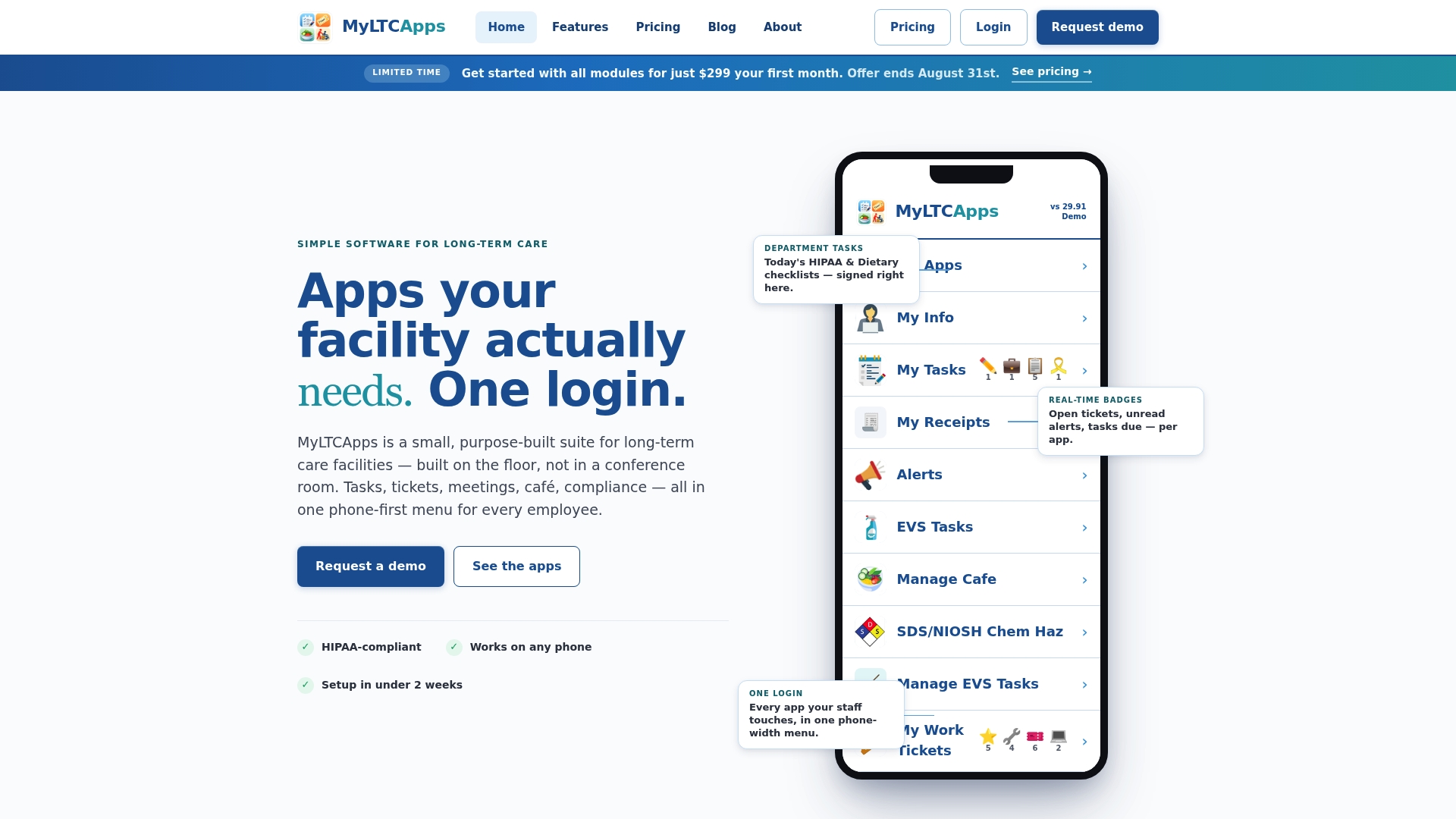
Lab results, inspection dates and vendor confirmations can sit in the Compliance Suite instead of a folder no one can find during an audit, and Alerts & SMS can flag a missed check before it becomes a pattern.
- Schedule recurring visual, monthly and semiannual checks as standing work tickets.
- Log lab results and remediation dates in one place reviewers can access.
- Send alerts when a check is overdue or a sensor reports an anomaly.
None of this replaces the physical work: MyLTCApps does not run the lab test or perform the tank cleaning. It keeps the schedule, the record and the follow-up from falling apart. Plans start at a monthly subscription rate, and the full lineup is on the pricing page.
Sources
- OSHA: Portable generator safety guidance
- NFPA 110 committee statements and annex guidance
- Diesel aerosols and gases guide — CDC/NIOSH
FAQ
Should I put a fuel stabilizer in my generator?
A stabilizer can slow oxidation in diesel or gasoline that will sit for an extended period, but it does not substitute for the lab testing and water checks that catch microbial growth or sediment. Treat it as one part of a broader fuel management routine, not a standalone fix.
What is the 20/20 rule for generators?
The 20/20 rule is a rule of thumb some operators use, generally meaning run the generator under load for about 20 minutes at roughly 20% or more of rated capacity during exercise cycles to help prevent wet stacking. Definitions vary by manufacturer and site, so check your engine maker’s exercise recommendations directly.
How long can fuel sit in a generator before it goes bad?
There is no single universal shelf life because it depends on fuel blend, storage temperature and tank condition, which is why NFPA 110’s guidance adds a stability test once fuel has been stored for 12 consecutive months or longer. Regular testing, not a fixed calendar date, is the reliable way to know if fuel has degraded.
Can you put fuel treatment in a generator?
Yes, fuel treatments such as biocides or stabilizers can be added to generator fuel to address specific problems like microbial contamination, but they work best when paired with lab testing before and after treatment. Post-treatment retesting between three and 14 days out confirms whether the treatment actually resolved the issue.