Avoid Fatigue Citations: On Call Scheduling for Nurse Managers

Avoid Fatigue Citations: On Call Scheduling for Nurse Managers
Run on-call with an acuity-driven, rotating roster that protects rest and spells out response windows in writing. Keep individual shifts at 12 hours or fewer, cap weekly hours at 40, and guarantee at least 10 consecutive hours off duty between shifts. Favor forward rotation over backward rotation whenever nurses move through days, evenings, and nights. The rest of this guide walks through the evidence behind those limits and how to build them into a schedule your staff will actually follow.
TL;DR:
- Nurses on call should have response windows tailored to acuity, with charge roles responding within 20 minutes and backup staff up to an hour depending on the situation.
- Rotation lengths are typically one week, with longer periods increasing fatigue risk, especially when staff handle multiple call-ins consecutively.
- Schedules must follow safety standards limiting shifts to 12 hours, weekly hours to 40, and guaranteeing 10 hours of rest between shifts.
- Using data-driven staffing models and involving staff in schedule design improves fairness and reduces fatigue-related risks.
- Technology tools that provide mobile visibility, alerts, and audit logging help enforce schedule compliance and prevent fatigue.
Table of Contents
- What on-call means in nursing and how response expectations work
- Common on-call schedule types and which one fits your unit
- Step-by-step best practices to design a fair, safe on-call schedule
- Fatigue limits and professional standards you’re required to enforce
- Turning policy into daily practice: acuity, roles, and technology
- Tracking whether your on-call schedule is actually working
- What actually gets on-call scheduling changes adopted
- How MyLTCApps helps you run a compliant on-call schedule
- Sources
- FAQ
What on-call means in nursing and how response expectations work
On-call nursing takes three common forms. Remote standby means a nurse stays reachable by phone and can be called in if census or acuity spikes. Required call-in adds a firm response window, often 20 to 30 minutes for critical care and up to an hour for long-term care. On-site on-call means the nurse is physically present but not actively working, common in labor and delivery or small rural facilities.
Response windows should scale with acuity and role, not sit at one blanket number for the whole facility.
- Charge nurses and rapid-response roles typically need the shortest windows, often under 20 minutes.
- Backup or secondary on-call staff can work with 30 to 60 minute windows since they cover overflow, not first response.
- Long-term care on-call nurses often have longer windows, reflecting lower acuity but still requiring a documented policy.
Once a nurse starts actively working during an on-call period, that time counts toward the weekly hour cap and shift-length limits described later. Compensation models vary: a flat stipend for availability, hourly pay once called in, or overtime once the shift crosses regular hours. Whichever model you choose, pay policy has to align with the same safety limits that govern scheduled shifts, not create an incentive to skip rest.
Common on-call schedule types and which one fits your unit
No single on-call model works everywhere. The right choice depends on unit size, patient acuity, and how many qualified staff you can rotate through the pool.
- Rotating weekly on-call cycles a set group of nurses through on-call duty one week at a time, giving predictability and even distribution of burden.
- Primary and secondary coverage pairs a first responder with a backup, useful when call volume is unpredictable and a single point of failure is unacceptable.
- Week/weekend splits separate weekday on-call from weekend on-call, which helps units with very different weekend census patterns.
- Semimonthly rotations assign on-call duty in fixed calendar blocks, simplifying payroll but sometimes clustering holidays unfairly for the same staff.
- Follow-the-sun models hand off on-call responsibility across time zones or sites in a multi-facility system, useful for corporate groups with several locations.
Rotation length usually runs one week for standard models and two weeks for semimonthly setups. Longer rotations reduce handoff friction but raise fatigue risk if the same nurse absorbs several calls in a row. Long-term care facilities often do best with a hybrid: a rotating base schedule combined with a self-scheduling window where nurses trade shifts within pre-set fairness rules, which keeps flexibility without breaking the rotation’s structure.
Step-by-step best practices to design a fair, safe on-call schedule
Start with data, not assumptions. Pull historical call volume by day and hour, overtime patterns, and acuity or workload metrics from the past several scheduling cycles. This tells you when call-ins actually spike, rather than when managers assume they do.
Bring staff into the design process early. A scheduling governance committee that includes floor nurses, not just managers, produces rotation rules that people trust and follow. Publishing those rules and documenting committee decisions reduces the perception that on-call assignments are arbitrary.
Build safety limits into the rotation itself rather than relying on individual nurses to self-monitor:
- Cap shifts at 12 hours and weekly hours at 40, per ANA guidance.
- Guarantee 10 consecutive hours off before the next shift or call period begins.
- Prefer forward rotation (days to evenings to nights) over backward rotation.
- Limit consecutive night shifts and use shorter night shifts where clinically possible.
Once the rules are set, the operational mechanics matter just as much as the policy. Define rotation cadence clearly, maintain a backup pool for when the primary on-call nurse cannot respond, and set incentive rules, whether that is differential pay or extra time off, so covering an unpopular slot feels fair rather than punitive. A written shift-swap process, with a clear approval chain and a conflict-resolution step for disputed trades, keeps the schedule from unraveling when people need flexibility. Self-scheduling approaches can run alongside the core rotation as long as swaps still respect the rest and hour limits.
Pro Tip: Build your surge staffing plan before you need it: a pre-approved list of who can be called for unplanned coverage prevents last-minute scrambling that erodes trust in the whole system.
Finally, plan for the unexpected. A documented surge staffing plan, with a clear escalation order from charge nurse to nursing supervisor to administrator on call, keeps a bad night from becoming a compliance failure.

Fatigue limits and professional standards you’re required to enforce
Scheduling policy is not just a staffing decision. It is a documented safety obligation, and the limits come from organizations that have studied nurse fatigue directly.
Employers should limit work weeks to 40 hours or fewer, restrict individual shifts to 12 hours or fewer, and ensure at least 10 consecutive hours of protected time off duty so nurses can obtain 7 to 9 hours of sleep.
American Nurses Association
Working beyond 12.5 hours in a shift raises the risk of errors, and nurses in national study samples routinely worked 50 to 55 minutes past their scheduled shift end. That overrun matters directly for on-call rotations: if a nurse finishes a shift nearly an hour late and then starts an on-call period without a protected rest interval, the schedule has already violated the standard it was built to meet.
NIOSH and CDC guidance adds three organizational duties beyond the raw hour limits: forward rotation as the default, frequent short breaks rather than one long break during demanding shifts, and countermeasures like restrooms or transportation support to reduce drowsy-driving risk after a long on-call stretch. None of these work without non-punitive reporting, meaning a nurse who flags a fatigue risk or a scheduling conflict should never face discipline for raising it. Auditing has to treat on-call time as active work the moment a nurse is called in, not just when the shift is formally logged.

Turning policy into daily practice: acuity, roles, and technology
Static on-call models, where the same number of nurses is on call regardless of patient load, waste staff time on slow nights and leave units short on busy ones. Acuity and workload data give a better basis for on-call staffing, and pairing that data with a collaborative decision process improves both fairness and satisfaction.
Clear role definitions keep response fast when a call actually comes in:
- Primary on-call responds first, within the window set for that role and acuity level.
- Secondary on-call activates when the primary cannot respond or when volume exceeds one nurse’s capacity.
- Triage or charge oversight decides whether a call requires on-call activation at all, filtering routine questions from true escalations.
Technology should reduce the administrative load of running this system, not add to it; for example, consider automatiza los turnos médicos por WhatsApp con agentes IA to streamline scheduling and notifications. Prioritize mobile notifications that reach nurses wherever they are, automatic conflict detection that flags a proposed swap against hour limits before it’s approved, and overtime alerts that catch a shift creeping past 12 hours. Audit logs matter too: they turn “who approved this swap” into a two-second lookup instead of a week of chasing paper. Daily handovers using structured formats like SBAR help preserve accuracy during after-hours communication, when cognitive load is highest and the margin for miscommunication is thinnest.
Tracking whether your on-call schedule is actually working
A schedule that looks fair on paper can still fail in practice. Regular measurement catches the gap.
- Track overtime hours and the percentage of calls answered within the target window to see whether response expectations match reality.
- Count forced call-ins and schedule conflicts as early signals that the rotation pool is too thin or too concentrated.
- Review incident reports tied to scheduling separately from general incident data, so fatigue-related patterns don’t get buried.
- Survey staff on perceived on-call burden at least quarterly, since satisfaction data catches problems that raw numbers miss.
A workable audit cadence runs weekly operational checks for coverage gaps, monthly fatigue-risk reviews looking at consecutive shifts and hour totals, and quarterly reports to the governance committee. After any incident tied to fatigue or a coverage gap, run a short after-action review and feed the findings directly into rotation rule changes rather than letting them sit in a report nobody revisits.
What actually gets on-call scheduling changes adopted
The biggest obstacle to fixing on-call scheduling is rarely the policy itself. It’s staff distrust built up over years of last-minute changes. A governance committee that includes floor nurses, not just administrators, tends to break that pattern because people trust rules they helped write.
Pilot changes on one unit before rolling them out facility-wide, and be transparent when you share audit findings, even the unflattering ones. Predictability, more than any single incentive, is what keeps a rotation from falling apart. Phone-first tools that give staff visibility into the schedule and swap status can take real friction out of that process.
— Philip
How MyLTCApps helps you run a compliant on-call schedule
Building the rotation is only half the job. Enforcing it every week, across every shift, is where most facilities lose ground. MyLTCApps’ Shift Scheduling module gives administrators a phone-first way to keep the rules from the sections above in force day to day.
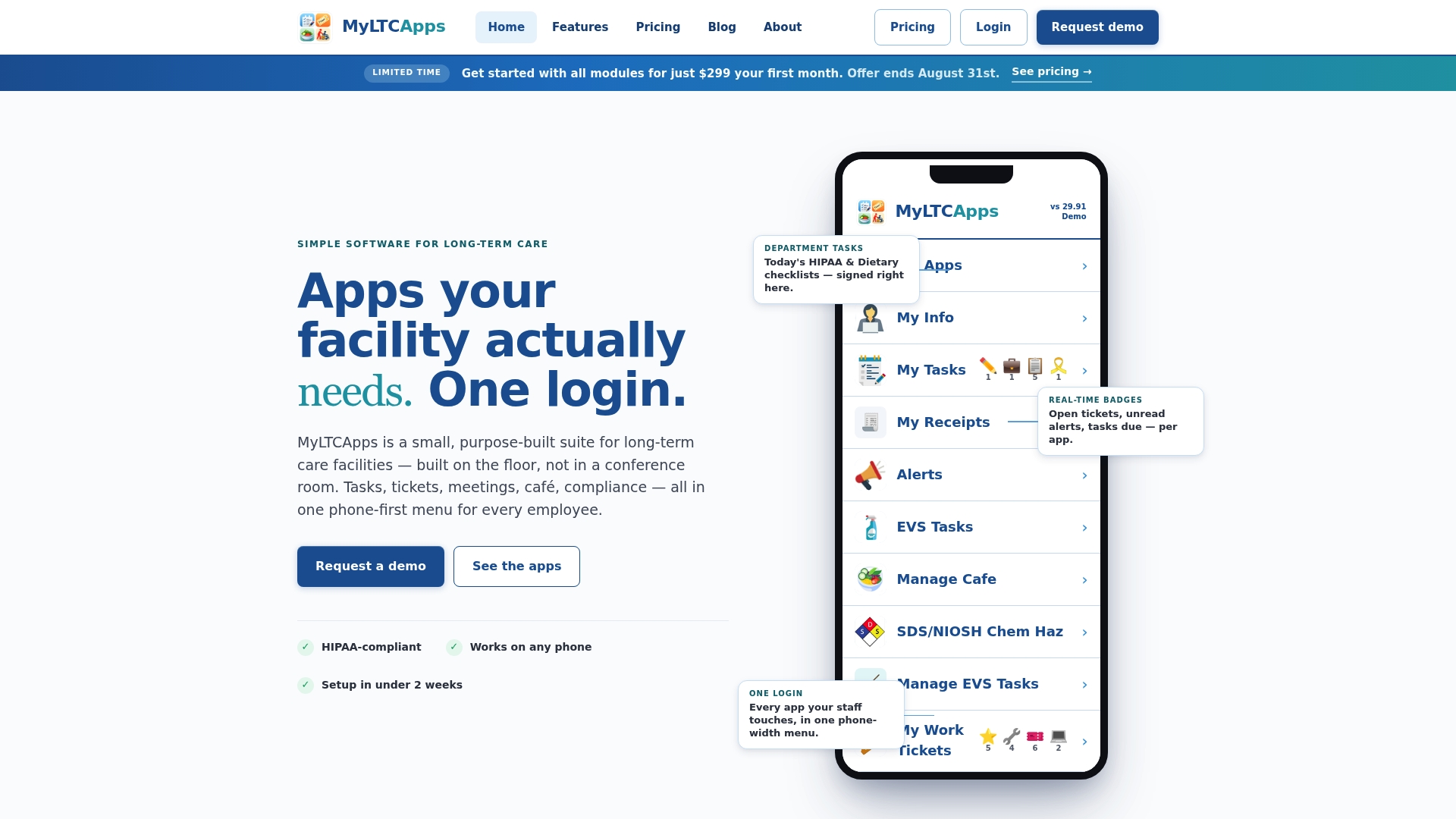
- Mobile visibility lets staff see their rotation, swap requests, and coverage gaps from their own device.
- Alerts and SMS flag an approaching 12-hour threshold or a shift swap that would break the 10-hour rest rule before it happens.
- Seeded compliance libraries in the Compliance Suite keep documentation ready when a governance committee or surveyor asks for it.
- Audit logs turn every swap and call-in into a record you can pull for a monthly fatigue-risk review without digging through paper.
If you’re rebuilding your on-call model this year, start with one unit as a pilot. Check pricing and plans or explore the full feature set to see what fits your facility’s size and staffing model.
This article is general information, not a substitute for advice from a qualified doctor. Consult a qualified healthcare professional about your own circumstances before acting on anything here.
Sources
- Addressing Nurse Fatigue to Promote Safety and Health | ANA
- Policy brief: Nurse fatigue, sleep, and health, and ensuring patient and public safety | CDC
- Final Progress Report: Staff Nurse Fatigue and Patient Safety | AHRQ
FAQ
How does on-call work for nurses?
On-call nursing means a nurse stays reachable during a scheduled window and responds within a set time if called in, ranging from about 20 minutes for critical roles to an hour for lower-acuity settings. Once activated, that time counts as work and falls under the same 12-hour shift and 40-hour weekly limits as a regular shift.
Can you provide examples of on-call schedules?
Common models include weekly rotating on-call, primary and secondary coverage pairs, week/weekend splits, semimonthly blocks, and follow-the-sun coverage across multiple sites. Many long-term care facilities use a hybrid: a base rotation combined with a self-scheduling window for trades.
What are the different types of scheduling in nursing?
Beyond on-call, nursing schedules generally fall into fixed shifts, rotating shifts across days and nights, self-scheduling with manager approval, and block scheduling used in some long-term care settings. Forward-rotating schedules, moving from days to evenings to nights, are preferred over backward rotation for circadian reasons.
Do on-call nurses get paid more?
Pay structure varies by facility: some pay a flat stipend for availability plus an hourly rate once called in, others pay straight overtime once the on-call shift pushes hours past the regular week. Any structure should still respect the same rest and hour limits that apply to scheduled shifts, since paying more for a call-in doesn’t reduce the fatigue risk tied to skipping recovery time.