Nurse Assignment Sheet Templates: Download and Use Guide

Nurse Assignment Sheet Templates: Download and Use Guide
Grab an editable Word or Google Sheets version first. Both let you rearrange columns fast during a chaotic shift change, and either format works as your base nurse assignment sheet before you decide if paper or a phone-first app fits your unit better. PDF versions are fine if you only need something to print and clip to a clipboard, but they’re a dead end if you need to tweak a field mid-shift.
- Download an editable Word/DOCX template if your unit still prints and hand-annotates sheets
- Grab a Google Sheets copy if multiple charge nurses need to edit the same file across a shift
- Consider a phone-first app if your unit needs real-time task updates instead of a static sheet
Before you touch a shared template, hit “Make a copy” so you’re not editing the master file. Keep dated versions in an archive folder. Surveyors and clinical instructors both tend to ask for them eventually.
Key Takeaways
A usable nurse assignment sheet combines complete clinical fields, strict confidentiality practices, and a clear process for accepting or refusing assignments safely.
| Point | Details |
|---|---|
| Pick the right file format | Use DOCX or Google Sheets for active editing; save PDF for print-only postings. |
| Include every core field | Room, precautions, lines, tasks, vitals, I&O, and signatures all belong on one sheet. |
| Protect patient privacy | Post initials and room numbers only, never full names or medical record numbers. |
| Know your right to refuse | Document concerns and notify supervisors immediately per ANA guidance. |
| Consider a phone-first pilot | MyLTCApps handles tasks, checklists, and scheduling, while clinical charting stays in the EHR. |
Table of Contents
- Which Nurse Assignment Sheet Template Should You Download?
- What Fields Belong on Every Nursing Assignment Sheet?
- How Do You Create a Nurse Assignment Sheet in Five Steps?
- Should Your Unit Use Paper or a Digital Assignment Sheet?
- How Should Student, Staff, and Long-Term Care Sheets Differ?
- What Are the Privacy Rules and Your Right to Refuse an Assignment?
- When Should You Replace Paper With a Phone-First App Like MyLTCApps?
- Try MyLTCApps as Your Phone-First Assignment Tool
- Where to Learn More About Assignment Sheets and Nurse Rights
- Sources
Which Nurse Assignment Sheet Template Should You Download?
The right file format depends on how fast your unit moves and who needs to edit the sheet mid-shift. A single-nurse med-surg float doesn’t need the same tool as a 40-bed long-term care wing juggling three shifts of CNAs.
DOCX (Word) works best when you want a clean, printable layout you can customize with tables and text boxes, and it’s the easiest format for nursing instructors who need to distribute a locked template. Google Sheets or Google Docs shine when several people need to see live edits, like a charge nurse updating room assignments while a preceptor reviews. XLSX (Excel) handles heavier data, like a multi-unit staffing matrix with formulas that auto-total patient counts per nurse. PDF is your print-and-post option; it’s not editable on the fly, but it’s the most reliable for wall postings. Some units still use PowerPoint-style dry-erase templates projected or printed for a whiteboard layout.
A few template types worth having on hand:
- Student clinical assignment sheet: built around learning objectives and instructor sign-off, similar to the format used in MCCC’s nursing clinical assignment sheet
- Charge nurse assignment board: a grid view showing every nurse’s patient load at a glance
- RN/CNA pairing grid: pairs licensed staff with aides and lists shared tasks
- Dry-erase wall board layout: for units that still post assignments physically each shift
- Printable single-shift sheet: one page, one shift, minimal fuss
- Multi-nurse staffing matrix: spreadsheet-style, useful for larger units tracking acuity across several nurses at once
Pro Tip: Rename every downloaded copy with the date and unit name before editing (e.g., “3West_Assignment_03-12-2026”) so nobody accidentally overwrites last week’s sheet.
What Fields Belong on Every Nursing Assignment Sheet?
A usable nursing assignment template needs more than a name and a room number. Miss a field and you’ve built a document that looks organized but fails the moment someone needs it under pressure.
At minimum, your sheet should include:
- Shift, date, and time at the top of the page
- Nurse name and role (RN, LPN, CNA)
- Patient room number and initials or a coded ID, never a full name or MRN
- Allergies and precautions (fall risk, isolation, NPO status)
- Lines, IVs, and oxygen currently running
- Assigned tasks specific to that patient
- Vitals schedule (q4h, q shift, per order)
- Intake and output (I&O) tracking column
- Pending labs or tests due that shift
- Signature or initials column for accountability
- Handoff notes for the next shift
- Escalation contact if the assigned nurse needs backup
Picture one row: Room 214B, initials “J.M.,” fall risk flagged, IV running at 75mL/hr, vitals due at 1400 and 1800, labs pending at 1600, initialed by the assigned RN. That’s a full clinical picture in one line, scannable in under five seconds.
Confidentiality matters here as much as completeness. Clinical manuals for student rotations specify that posted sheets should never show full names or medical record numbers. Room numbers and initials are typically acceptable, according to Hampton University’s clinical guidelines, but check your own facility’s policy before posting anything where visitors might see it.
How Do You Create a Nurse Assignment Sheet in Five Steps?
Building an assignment sheet isn’t complicated, but skipping a step is how patients fall through the cracks.
- Gather patient and staffing info. Pull census data, acuity notes, and who’s actually on the floor that shift.
- Prioritize by acuity and skill. Match your highest-need patients to your most experienced nurses first.
- Assign tasks and pair RN/CNA teams. Split the workload so aides know exactly whose vitals and turns they’re covering.
- Communicate at handoff. Walk the sheet verbally with the outgoing shift. Never let the paper do all the talking.
- Record updates and archive the final version. Note any last-minute swaps before filing it.
Pro Tip: Color-code or flag high-acuity patients in red so a float nurse picking up the sheet mid-shift knows instantly who needs eyes first.
Keep dated copies in a shared folder, not scattered desktop files. When a survey team asks for staffing records from three weeks back, you want that answer in under a minute, not a scavenger hunt.
Should Your Unit Use Paper or a Digital Assignment Sheet?
Neither format wins outright. It depends on how fast your unit moves and what you need to prove later.
Paper sheets work well when you want a straightforward tool without tech distractions, but if your unit needs real-time updates and accountability, consider one of the best time clock apps designed for mobile workforce management.
- You need something visible on a wall board for quick glances
- You’re training students who benefit from physically marking up a sheet
- Your shift is short and coverage rarely changes mid-shift
Digital sheets work better when:
- Multiple staff need real-time updates as patient conditions shift
- You need an audit trail showing who changed what and when
- Staff are already using phones or tablets for other tasks
High-acuity units tend to outgrow paper fast. A whiteboard doesn’t log history, and a spreadsheet emailed at 6 a.m. is stale by 9. If you go digital, store the file in a password-protected folder or a dedicated app rather than a shared inbox where old versions pile up.
How Should Student, Staff, and Long-Term Care Sheets Differ?
A student clinical sheet, a staff RN med-surg sheet, and a long-term care template all solve different problems, so don’t force one layout onto all three.
- Student clinical sheets need learning objectives, instructor sign-off, and clear limits on restricted tasks (no unsupervised IV push meds, for example)
- Staff RN med-surg sheets need acuity flags and dedicated med administration columns
- Long-term care templates need ADL tracking, meal and tray notes, and scheduled turning or continence checks instead of acute-care fields like fresh post-op orders
Instructors should tie student assignments to what’s actually being taught that rotation, not just whoever’s free on the floor.
What Are the Privacy Rules and Your Right to Refuse an Assignment?
Confidentiality and professional accountability both live on this sheet, and getting either wrong has real consequences.

On the privacy side: never post full names, medical record numbers, or diagnoses on a shared assignment sheet. Room numbers and initials are typically fine, but restrict who can see the sheet, lock any archived digital copies, and redact identifying details before using a sheet as a teaching example.
On the professional side, the American Nurses Association affirms that nurses have both the right and the obligation to object to an assignment they believe, in good faith, puts patients or themselves at serious risk. Accepting an assignment isn’t just filling a slot. It’s a formal professional agreement that transfers responsibility for that care to you.
If you need to object, the process matters as much as the objection itself. Maryland’s Board of Nursing guidance recommends notifying your supervisor immediately, documenting the concern in writing, and staying available to help until the assignment is resolved.
Steps worth following if you’re refusing or objecting to an assignment:
- Notify your charge nurse or supervisor verbally, right away
- Document the date, time, and who you told
- File a written notice or an Assignment Despite Objection (ADO) form if your facility has one
- Keep a personal copy of whatever you submit
- Stay on the floor and available until the situation is resolved
When Should You Replace Paper With a Phone-First App Like MyLTCApps?
Paper and static spreadsheets start breaking down once a unit hits a certain size or acuity level. That’s usually the point where teams look at a phone-first task platform instead.

A tool like MyLTCApps can help by giving staff real-time task updates, built-in checklists, and an audit trail without anyone hunting for the latest printed version. Fewer transcription errors happen when a CNA marks a task complete on a phone instead of scribbling on a shared sheet that three other people are also touching that shift.
Rollout works best in stages:
- Pick one or two modules to start (tasks, shift scheduling, or competency tracking)
- Pilot on a single unit before facility-wide rollout
- Train charge nurses first, since they’ll field most staff questions
- Track time saved and audit readiness after 30 to 60 days
Pro Tip: Run your pilot during a slower census period so staff can learn the app without also managing a full house.
One clear limit: MyLTCApps manages tasks, checklists, and scheduling. It doesn’t replace your EHR for clinical documentation, so med administration records and clinical notes still belong there.
Why Templates and Documentation Still Matter Most
Good templates and clean documentation protect patients and protect you. Two habits worth building: flag high-acuity patients visually, whether that’s a color code or an icon, so nobody has to read fine print to know who needs attention first. And archive every shift sheet with a date stamp, even the uneventful ones, because the boring shifts are the ones nobody remembers accurately three months later.
Try MyLTCApps as Your Phone-First Assignment Tool
Paper sheets and shared spreadsheets both work until your unit outgrows them. Once staff start emailing three versions of the same shift sheet, or a survey team asks for records you can’t find fast, it’s worth trying a tool built specifically for long-term care task tracking.
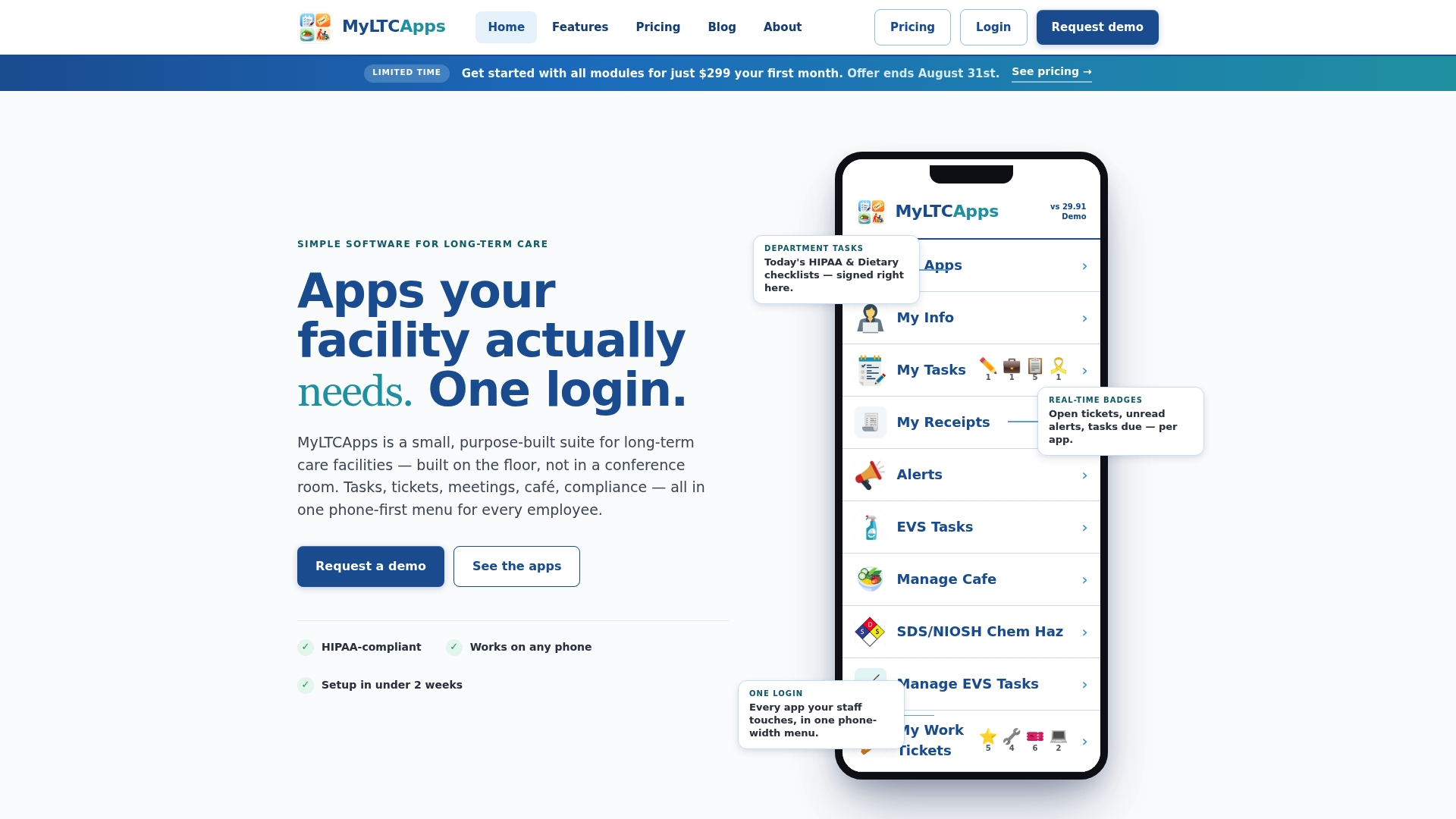
MyLTCApps gives charge nurses a mobile view of daily tasks, checklists, and shift coverage without the paper trail. A few things it handles well for assignment-related workflows:
- Real-time task updates staff can mark complete from their own phone
- Compliance checklists tied to daily operations
- Shift scheduling that syncs with staff assignments
- Competency tracking so managers know who’s qualified for what
It won’t replace your EHR. Clinical charting stays where it belongs. What it does is take the task and checklist side of daily operations off paper and onto a phone. If your unit is ready to pilot a digital workflow, start with the task and checklist module and see what a single-unit trial looks like before rolling it out further.
Where to Learn More About Assignment Sheets and Nurse Rights
A few sources worth bookmarking if you want to dig deeper into templates or professional rights:
- ANA’s position statement on accepting or refusing assignments, the primary authority on your professional rights
- Vanderbilt’s sample assignment sheet, a real hospital layout you can adapt
- Hampton University’s clinical manual, for confidentiality rules in student clinical settings
Sources
- Rights of RNs When Considering a Patient Assignment | ANA
- Can a Nurse Refuse a Patient: Valid Reasons and Rules - LegalClarity
- Guidelines for the Clinical Experience: Manual and Forms Packet (Hampton University)