Generator Test Log Template: NFPA 110 Checklist for Facilities

Generator Test Log Template: NFPA 110 Checklist for Facilities
A compliant generator test log has to capture ten things every time you run the unit: date and time, runtime duration, load in kW and percent of standby nameplate, voltage, frequency, oil pressure, coolant temperature, ATS transfer and retransfer times, operator ID, and any deficiencies with the corrective action taken. Miss one of these, and you have a gap an inspector will find before you do.
These fields exist because NFPA 110 and The Joint Commission use them to confirm your generator will actually work when the power fails, not just that someone pushed a button once a month. Here’s the fast version of what to grab and where.
- Minimum 6 to 8 fields: date/time, load kW and %, voltage, frequency, oil pressure, coolant temp, ATS transfer time, operator signature.
- Where to start: state health department sample logs (Minnesota and Indiana both publish downloadable forms) or the NFPA Annex A sample log.
- Why it matters: incomplete test records rank among the most common findings during generator inspections.
Key Takeaways
A generator test log satisfies NFPA 110 and Joint Commission expectations only when it captures load, timing, transfer data, and corrective actions together, not any single field alone.
| Point | Details |
|---|---|
| Ten core fields | Date/time, duration, load kW/%, voltage, frequency, oil pressure, coolant temp, ATS transfer times, operator, deficiencies. |
| Monthly test rule | Run 30 continuous minutes under load starting once the EPS accepts power, using standby nameplate for the percentage. |
| Retention baseline | Keep records on-site at least three years for AHJ and surveyor review. |
| Common failure point | Missing ATS transfer seconds and unsigned entries are the pitfalls that most often trigger citations. |
| Digital option | Myltcapps turns paper logs into mobile checklists with timestamped signatures and surveyor-ready exports. |
Table of Contents
- What Does NFPA 110 Require for Generator Test Logs?
- What Fields Belong on Every Log Line?
- Sample Generator Test Log Layout
- How Do You Perform and Document a Monthly Load Test?
- How Long Should You Keep Generator Test Records?
- Where Can You Download an Official Generator Test Log Template?
- What Should Nursing Homes and LTC Facilities Watch For?
- Move Your Generator Log From Paper to a Mobile Checklist
- Frequently Asked Questions
- Sources
What Does NFPA 110 Require for Generator Test Logs?
NFPA 110 sets the testing calendar most authorities having jurisdiction (AHJs) and health inspectors check against. Miss the interval and the paperwork doesn’t matter.
- Monthly: run the emergency power supply system under load for 30 continuous minutes, or use the manufacturer’s exhaust temperature method, then record the load level and duration under Section 8.4.2.
- Semiannual and annual: Sections 8.3.4 and 8.4.9 call for broader inspection items, including battery service and transfer switch exercising, on top of the monthly load run.
- Supplemental load bank testing: required when monthly loads consistently fall short of 30 percent of nameplate rating.
AHJs typically ask for two things first during a site visit: the written testing schedule and the last three years of records. Facilities that keep digital exports on hand tend to clear this step fastest, according to Facility Compliance Hub’s guidance.
Retention matters as much as the test itself. Keep records on-site so any inspector, surveyor, or AHJ representative can access them on request for a suitable retention period. Some emissions rules for certain engines extend that further, so check your specific equipment class before you shred anything.
What Fields Belong on Every Log Line?
Break the log into five groups and you’ll never wonder what to write down mid-test.
Identification. Facility name, generator ID, physical location, and model/serial/nameplate kW rating. This is what ties a specific test to a specific machine when you have more than one unit on site.
Timing. Date, start time, stop time, and the cumulative hour meter reading. The hour meter matters more than most techs realize. It’s what lets you catch a generator that’s quietly logging fewer running hours than it should, months before a bigger failure shows up.
Performance readings. Applied load in kW and as a percentage of standby nameplate, voltage by phase, frequency in Hz, amperage if measured, oil pressure, coolant temperature, battery voltage, and exhaust gas temperature if that’s your test method. LegalClarity’s breakdown of generator log requirements treats this set as the backbone of an audit-ready record.
Transfer data. Transfer time, retransfer time, the ATS unit ID, and any delayed or failed transfer noted in seconds, not just “delayed.”
Observations. Alarm or fault codes, a plain description of any deficiency, the corrective action taken, parts replaced, and a technician signature or digital ID.
Pro Tip: Base your load percentage on the generator’s standby nameplate rating and start any timing only after the unit accepts load. Warm-up and cool-down don’t count, and this is the single most common math error facilities make.
Sample Generator Test Log Layout
Here’s a compact column layout you can drop straight into a spreadsheet or a printed form. It matches what NFPA 110 and most AHJs expect to see, with one filled example row underneath so you know what “done right” looks like.

The load, voltage, transfer time, and technician signature fields are the ones inspectors check first. Battery voltage and exhaust temp are optional extras that pay off later for trending, even though they won’t sink a compliance review on their own.
How Do You Perform and Document a Monthly Load Test?
- Initiate from the ATS test switch, not the generator’s own control panel. This validates the entire chain: loss-of-power detection, starter response, transfer, and load acceptance, a distinction the Joint Commission specifically calls out.
- Run pre-test safety checks: fuel level, oil and coolant levels, battery voltage, and isolate non-essential loads if your test plan calls for it.
- Time the 30 continuous minutes starting the moment the emergency power supply system accepts load, not from cold start.
- Record load as kW and percent of standby nameplate, or log exhaust gas temperature if that’s your documented method, and note which one you used.
- Log transfer and retransfer times, including any delay, with the exact seconds rather than a vague “slow.”
Pro Tip: If your building’s actual load can’t push the generator to 30 percent of nameplate, don’t fudge the number. Schedule an annual supplemental load bank test at staged loads, 50% for 30 minutes then 75% for an hour, and write the rationale directly into the log so an inspector sees why you took that route.
How Long Should You Keep Generator Test Records?
Keep on-site records for an appropriate period so any AHJ or surveyor visit can be promptly supported. Engines under certain federal emissions rules may carry longer retention windows, so confirm against your equipment’s specific classification.
Most citations trace back to a handful of repeat mistakes:
- Load values left blank or written as “OK” instead of a number.
- Warm-up time counted toward the required 30 continuous minutes.
- ATS transfer seconds never recorded, just a checkmark.
- Entries with no technician signature.
- A deficiency noted with no follow-up corrective action logged.
Name two staff members who can pull records on request, keep a written testing schedule posted where inspectors expect it, and maintain a digital backup so nothing depends on one filing cabinet.
Where Can You Download an Official Generator Test Log Template?
You don’t need to build a form from scratch. Several state health departments and standards bodies already publish ones that match NFPA 110’s field list.
- State templates: Minnesota’s sample generator testing log and Indiana’s downloadable monthly load test form are both free and widely referenced by AHJs.
- NFPA Annex A includes sample logs that mirror the exact fields Section 8 expects.
- Facility operations logs, like the one University of Nebraska-Lincoln’s operations team publishes, offer a pragmatic middle ground between a bare-bones form and a full compliance document.
Fillable PDFs preserve timestamps better than paper, but paper still wins for on-the-spot signatures during a power outage when a laptop isn’t handy. Pick the format that survives your actual testing conditions, not the one that looks cleanest in a binder.
What Should Nursing Homes and LTC Facilities Watch For?
Long-term care carries stakes paper facilities don’t: life-sustaining equipment depends on that generator starting every time. Many nursing home regulations require at least 24 hours of on-site fuel or a guaranteed priority refill contract, so your test log should note fuel level at every run, not just during emergencies.
- Train at least two staff members to run the test, locate past logs, and sign records, so testing never stalls because one person is on vacation.
- Track competency for anyone performing monthly tests, the same way you’d track any other clinical or technical skill.
- Consider digital checklists with automatic exports. A maintenance work-ticket system that turns a logged deficiency directly into an assigned repair closes the loop faster than a sticky note on a supervisor’s desk.
A note on where this checklist comes from
This field list comes straight from cross-referencing NFPA 110’s Section 8 language with Joint Commission survey guidance and the state templates facilities actually use day to day. If your facility runs unusual equipment or a nonstandard test method, run your specific setup by your AHJ before finalizing your log format.
Move Your Generator Log From Paper to a Mobile Checklist
Paper logs get lost, signatures fade, and finding “the March test from two years ago” during a surprise survey is nobody’s idea of a good afternoon. Myltcapps replaces that binder with a mobile checklist your maintenance staff fills out on a phone, mid-test, with the same fields this article just walked through.
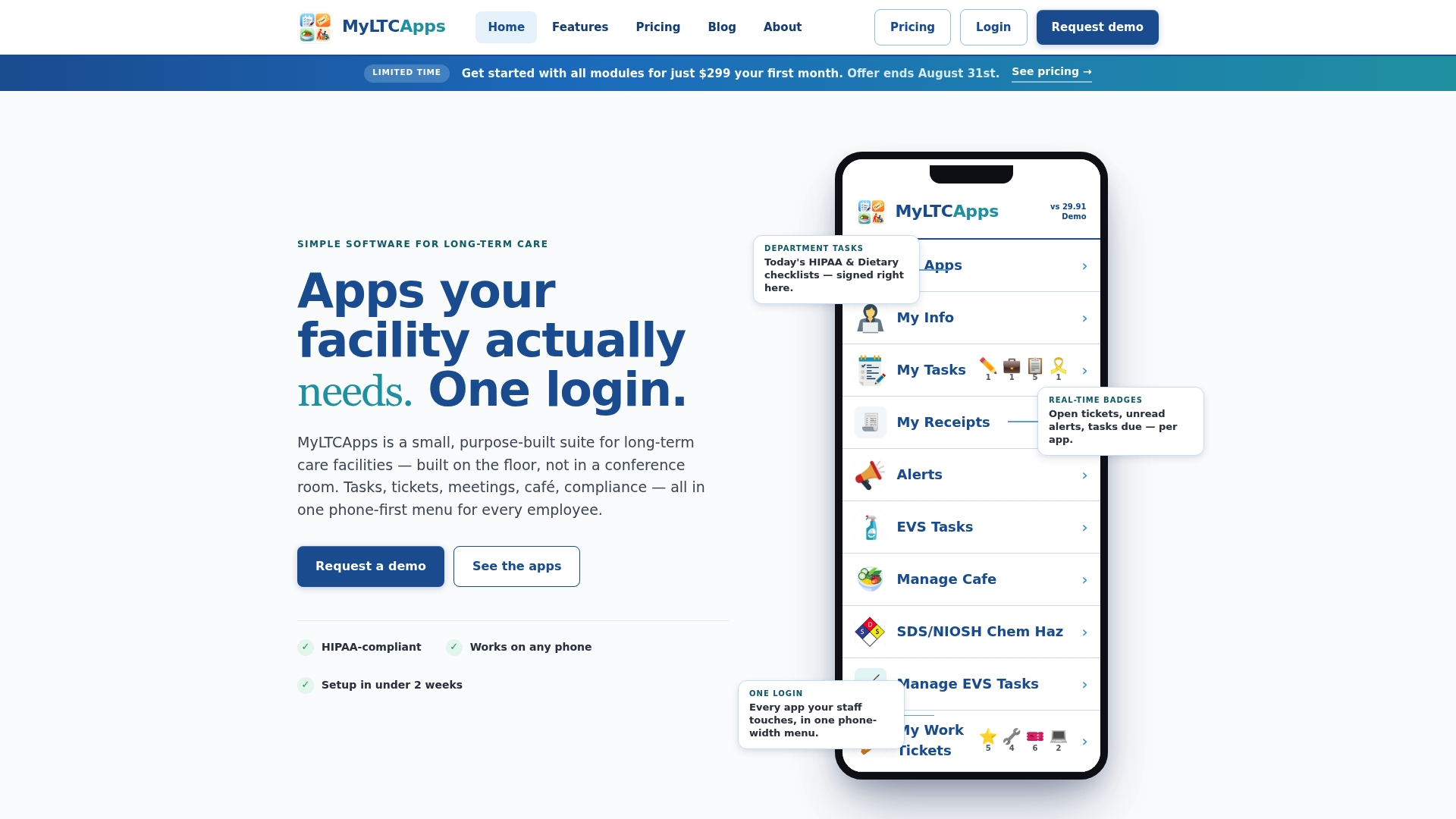
Every entry gets a timestamped digital signature automatically, so there’s no question of who ran the test or when. Deficiencies logged during a generator check can hand off directly into a maintenance work order without anyone re-typing the same information into a second system. When a surveyor asks for the last three years of records, you export a CSV or PDF instead of digging through a filing cabinet. Facilities can even import the column labels from the sample table above straight into their own task checklist templates. If your current process depends on one person remembering where the binder is, it’s worth seeing what a digital version looks like for your team.
Frequently Asked Questions
How often does a generator test log need an entry? At minimum, monthly, when you run the required 30-minute load test. Semiannual and annual inspections add more items to the same log, and some facilities log weekly visual checks too, even though NFPA 110 doesn’t mandate that frequency.
What percentage of load counts as valid for a monthly test? At least 30 percent of the generator’s standby nameplate rating, not its prime rating, sustained for 30 continuous minutes after the unit accepts load.
How long should a facility keep generator testing records? A minimum of three years on-site is the common baseline, though certain federal emissions rules for specific engine classes can require longer retention.
Can a spreadsheet replace a paper generator test log? Yes, as long as it captures the same fields and preserves a reliable timestamp and signature trail. Fillable PDFs and digital checklist apps both work; the format matters less than the completeness of the fields.

What happens if a generator can’t reach 30 percent load during monthly testing? NFPA 110 requires a supplemental annual load bank test at staged loads instead, and the rationale for skipping the standard monthly load target should be documented directly in the log.
Sources
- NFPA 110 Emergency Generator Compliance Guide
- Generator - Monthly Load Test | Joint Commission
- Inspection and Testing of Emergency Generators (Minnesota Department of Health)
- Generator Log Sheet Requirements, Fields, and Retention - LegalClarity
- Monthly_Generator_Load_Test_log.doc (Indiana)