Texture Modified Diets: A Kansas LTC Staff Guide

Texture Modified Diets: A Kansas LTC Staff Guide
Texture modified diets are therapeutic food and liquid consistencies prescribed for residents with dysphagia, the medical term for swallowing difficulties, to prevent choking and aspiration pneumonia. The gold standard for classifying these diets is the IDDSI framework, which defines a continuum of 8 levels (0–7) using numbers, text labels, and color codes. Levels 0–4 cover drink thicknesses; Levels 3–7 cover food textures. Here is what those food levels look like in practice:
- Level 3 (Liquidised/Moderately Thick): Smooth, no lumps, eaten with a spoon only, no chewing required
- Level 4 (Pureed/Extremely Thick): Holds shape on a plate, falls off a spoon cleanly, cannot be poured
- Level 5 (Minced and Moist): Small soft lumps, tongue can mash them, no separate thin liquid
- Level 6 (Soft and Bite-Sized): Tender, moist pieces, requires chewing, no knife needed
- Level 7 (Regular/Easy to Chew): Normal everyday foods, all textures, full chewing required
Deviating from IDDSI terminology creates real clinical risk. Errors during staff handoffs or transfers between facilities have been linked to adverse events including choking and death. When a resident declines a recommended texture modification, a Managed Risk Agreement documents their understanding of the risks and protects the facility. Kansas long-term care facilities benefit from working with local registered dietitians who know these standards and can translate them into compliant meal plans.
Which Kansas dietitians specialize in texture modified diets?
Five registered dietitian consultants serve Kansas long-term care facilities with relevant expertise in modified texture foods and dysphagia diet management.
| Provider | Services Offered | Specializations | Certifications | Insurance | Location | Rating |
|---|---|---|---|---|---|---|
| The Kansas City Dietitian | General dietary consulting, texture modified diet planning, LTC dietary management | General nutrition, dysphagia diet management | Not publicly listed | Not publicly listed | Overland Park, KS | 5★ (104 reviews) |
| The Gut Edit | Personalized dietary strategies for GI conditions, gut health education, texture modified diet planning | IBS, gastroparesis, celiac disease, colitis, bowel resections | MS, RD, CSDH, LD (Mallory Grassmuck) | Not publicly listed | Serves Kansas area | 5★ (44 reviews) |
| The Tasty Balance Dietitian | Nutrition counseling, eating disorder support, digestive condition management, nurse practitioner support | Eating disorders, digestive conditions, integrated nutrition and psychology | RD (in-network with major plans) | Aetna, BlueCross BlueShield; many clients pay $0 | Serves Kansas area | 4.6★ (37 reviews) |
| Tailored Nutrition | Personalized nutrition guidance for LTC populations | Personalized dietetic support | RD credentials implied; not specifically listed | Not publicly listed | Kansas City metro area | 4.9★ (27 reviews) |
| On Kate’s Plate LLC | Integrative and functional nutrition counseling, personalized dietary balance | Integrative nutrition, functional dietetics, lifestyle and diet balance | Registered Dietitian Nutritionist | Not publicly listed | Prairie Village, KS | 5★ (11 reviews) |
The Kansas City Dietitian in Overland Park is the most established general dietary consulting option for Kansas LTC facilities. Its scope covers texture modified diet planning alongside broader dietary management, making it a practical first call for facilities that need a consultant familiar with the full range of resident nutrition needs.
The Gut Edit stands out for residents whose swallowing difficulties intersect with complex GI conditions. Mallory Grassmuck holds MS, RD, CSDH, and LD credentials, and her practice covers gastroparesis, celiac disease, colitis, and bowel resections. For a resident on a pureed meal plan who also manages GERD or a bowel resection, that combination of dysphagia diet expertise and GI specialization is hard to find in a single consultant.
The Tasty Balance Dietitian is the clearest choice when insurance coverage matters. In-network status with Aetna and BlueCross BlueShield means many clients pay nothing out of pocket, and the practice blends nutrition science with psychological support, which is relevant for residents who resist texture modifications due to food aversion or anxiety.
On Kate’s Plate LLC, based in Prairie Village, takes an integrative and functional approach. For residents where lifestyle factors and overall dietary balance are as important as clinical compliance, this practice offers a personalized angle that goes beyond a standard dysphagia diet order.
Tailored Nutrition offers personalized nutrition guidance in the Kansas City metro area. Public details on certifications and specializations are limited, so it suits facilities looking for a local option for straightforward personalized dietetic support.
Pro Tip: When contracting a dietitian consultant for your facility, ask specifically whether they follow IDDSI framework levels in their documentation. A consultant who uses facility-specific or outdated terminology creates care transition problems when residents transfer to hospitals or other LTC settings.
How do you implement texture modified diets safely in your facility?
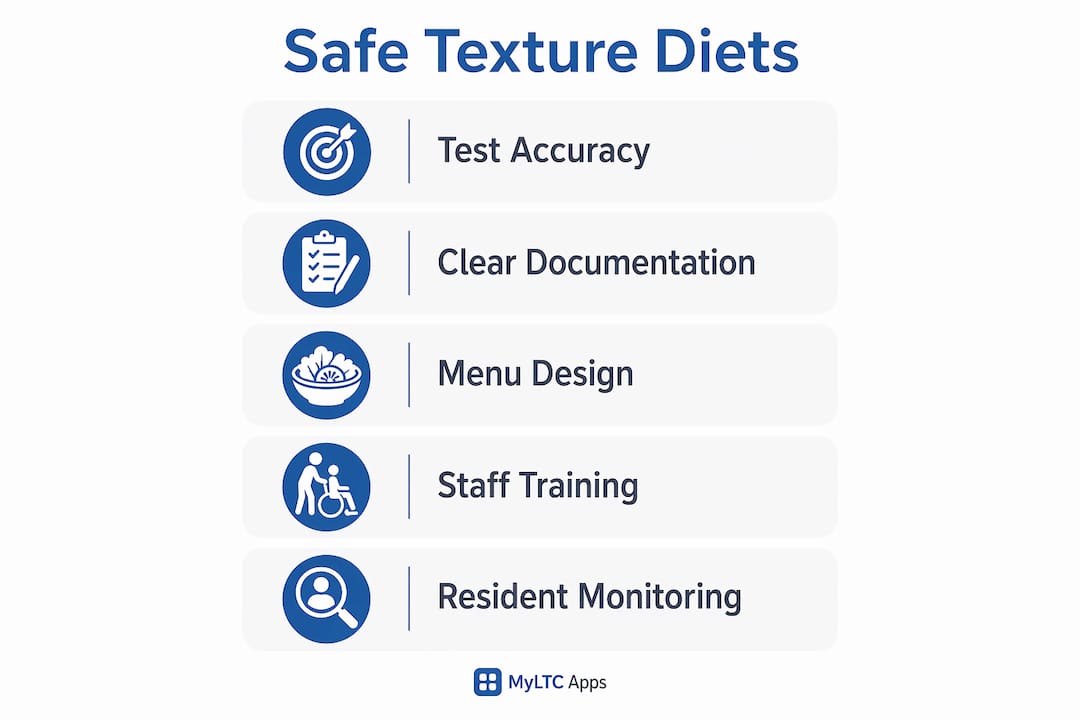
Safe implementation depends on three things working together: accurate testing at serving time, clean documentation, and consistent staff training. Getting any one of them wrong puts residents at risk.

Testing at the point of service
IDDSI testing methods, including the fork drip test, spoon tilt test, and flow test, are designed to confirm food texture and drink thickness at the time of serving, not just at preparation. Temperature and time both affect viscosity. A thickened liquid that passes a flow test in the kitchen may thin out by the time it reaches a resident’s room. Staff need to understand this and test under actual serving conditions.
Documentation and diet order accuracy
Linking a resident’s dysphagia diet level to their other dietary restrictions in a single order is a requirement, not a best practice. ASHA guidance is explicit: a resident requiring IDDSI Level 5 (minced and moist) who also needs a low-sodium diet needs both elements documented together. An order that captures only the texture level and omits the sodium restriction creates a compliance gap and a safety risk. Your diet order documentation should also clearly attribute nutritional restrictions to the appropriate ordering clinician, whether that is a physician or a registered dietitian.
Integrating these orders into your electronic health records or resident meal tracking system closes the loop between the clinical team and the kitchen. When diet orders live in a separate binder or a verbal handoff, errors multiply.
Mixed consistency foods and menu design
Mixed consistency foods such as soup with broth and solid pieces are among the most common aspiration hazards in LTC kitchens. Thin liquids combined with solids trigger unsafe swallows in residents with dysphagia. Facility-wide menu standardization that flags and controls mixed consistency items is the most direct way to reduce that risk. Any exception requires a specific order.
Staff training and interdisciplinary communication
Staff who prepare, serve, and monitor meals need hands-on training on IDDSI levels, not just a laminated chart on the wall. In-service training records should document who was trained, on what content, and when, so your facility can demonstrate compliance during a survey. Speech-language pathologists, dietitians, nursing staff, and kitchen staff all carry different pieces of the picture. A resident’s swallowing ability can change quickly, and the care team needs a clear channel to communicate those changes before the next meal tray goes out.
Monitoring protocols should include regular reassessment of each resident’s swallowing ability and diet tolerance, not just an initial evaluation. Tracking changes in weight, hydration, and mealtime behavior over time gives your team early signals that a diet level adjustment may be needed. For residents who refuse their prescribed texture level, a Managed Risk Agreement documents their informed choice and protects the facility. Good elderly nutrition practices for caregivers reinforce why consistent monitoring matters as much as the initial diet order.
Designing these diets well goes beyond simple menu changes. Maintaining safe texture, adequate moisture, and acceptable palatability across a full menu cycle requires sophisticated preparation techniques and trained kitchen staff who understand why consistency matters clinically, not just aesthetically.
Myltcapps keeps your diet tracking and compliance in one place
The dietitian consultants above handle the clinical side of texture modified diet planning. The operational side, tracking which resident is on which IDDSI level, documenting diet order changes, logging staff training, and generating surveyor-ready reports, is where Myltcapps fits in.
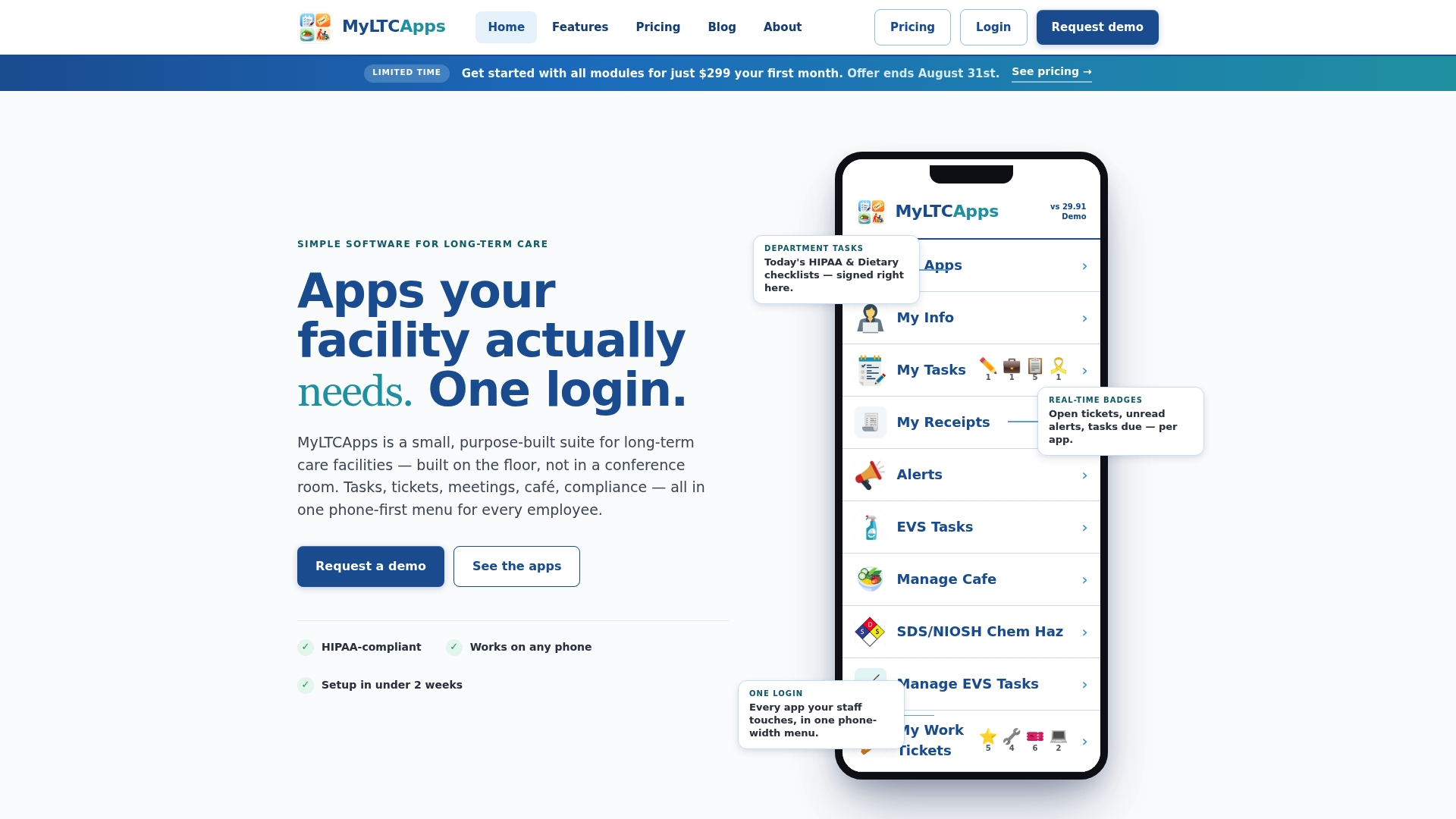
Myltcapps is a phone-first SaaS platform built specifically for long-term care and skilled nursing facilities in Kansas. Its dining management module connects resident diet orders directly to meal tracking, so kitchen staff see the current IDDSI level for every resident without hunting through a paper binder. The compliance task and checklist tools let you build daily workflows around diet order verification and mealtime monitoring, with real-time alerts when a task is missed. Staff training records, including dysphagia diet in-services, are tracked in the same system. When a surveyor walks in, your documentation is already organized and exportable. Facilities managing texture modified diets across a full resident census need that kind of operational backbone. Schedule a demo at myltcapps.com/kansas-long-term-care to see how it fits your facility’s workflow.
Key Takeaways
The IDDSI framework’s 8 standardized levels are the clinical and operational foundation for every texture modified diet decision in a Kansas long-term care facility.
| Point | Details |
|---|---|
| IDDSI levels 0–7 | Drinks cover Levels 0–4; food textures cover Levels 3–7, each with a number, label, and color code. |
| Test at serving time | Food viscosity changes with temperature; IDDSI testing must happen under actual serving conditions, not just at prep. |
| Link all diet restrictions | A dysphagia diet order must include co-existing restrictions like low sodium in the same documented order. |
| Managed Risk Agreements | When residents refuse texture modifications, a formal risk agreement documents their informed choice and protects the facility. |
| Myltcapps for operations | Myltcapps connects resident diet orders, meal tracking, compliance checklists, and staff training records in one mobile platform for Kansas LTC facilities. |