Building a Shift Swap Policy That Protects Coverage and Compliance

Building a Shift Swap Policy That Protects Coverage and Compliance
A shift swap policy requires documented employee consent, manager approval, and verification that the swap won’t create overtime or qualification gaps. A “swap” means two employees trade assigned shifts; it differs from an “open shift” (an unfilled slot posted for anyone to claim) and a “substitution” (one person covering another’s shift without a true trade).
Before any swap updates the master schedule, managers must confirm:
- Both employees have given written or logged consent
- The swap won’t push either person into unplanned overtime
- Both parties are qualified and credentialed for the role
- Timekeeping will reflect actual hours worked, since the FLSA requires accurate records of who worked what, with a narrower exception for voluntary public-agency substitutions.
Key Takeaways
A compliant shift swap policy combines documented mutual consent, manager approval, and objective eligibility checks so overtime, coverage, and payroll accuracy are protected every time a trade happens.
| Point | Details |
|---|---|
| Require dual consent | Both employees must confirm the swap in writing before a manager reviews it. |
| Check overtime every time | No swap should push either employee over 40 hours without proper overtime pay. |
| Use objective eligibility rules | Name specific job titles or certifications instead of vague “similarly qualified” language. |
| Decide within 24 to 48 hours | Set a clear SLA for approvals, with an exception path for genuine emergencies. |
| Automate it with Myltcapps | Myltcapps runs eligibility checks, roster updates, and audit logs from a phone-first workflow. |
Table of Contents
- What Counts as a Shift Swap (And What Doesn’t)
- Why an Informal Swap System Puts You at Risk
- The Core Elements Every Shift Swap Policy Needs
- How to Process a Swap Request Step by Step
- Where Shift Swaps Run Into Legal Trouble
- Turning Your Policy Into a Simple Form and Workflow
- Tracking Whether Your Policy Is Actually Working
- What Most Facilities Get Wrong About Swaps
- How Myltcapps Makes Swap Approvals Faster and Auditable
- Frequently Asked Questions About Shift Swap Policies
- Sources
What Counts as a Shift Swap (And What Doesn’t)
A shift swap is a mutual trade: Employee A works Employee B’s Tuesday shift, and B works A’s Thursday shift in return. That’s different from shift cover, where one employee simply picks up a shift someone else can no longer work, with no trade going the other direction. An open shift is a scheduling gap posted to a pool of eligible staff, first-come or manager-assigned. A substitution is closer to cover but often implies a temporary, single-instance stand-in, sometimes without a formal approval step.
Here’s why the distinction matters beyond semantics:
- Swaps and substitutions affect payroll differently. A trade nets out hours between two people; a cover adds hours to one person’s total, which can trigger overtime.
- Open shifts usually route through a different approval path since no existing shift is being vacated by a trade partner.
- Sloppy terminology in a handbook creates loopholes. If “swap” and “cover” are used interchangeably, employees will exploit whichever definition benefits them at approval time.
Nail down these terms in writing before you draft anything else. Everything downstream, from your overtime math to your audit trail, depends on which pattern actually happened.
Why an Informal Swap System Puts You at Risk
Handshake deals between staff feel efficient until they backfire. A documented shift trade form that captures consent, qualifications, and signatures is what actually protects you when payroll or a labor complaint comes calling. Here’s what a written policy buys you that a group text chain never will:
- Coverage continuity. Informal swaps arranged by text get lost, forgotten, or unconfirmed by one party, leading to a no-show on a shift nobody flagged as short-staffed.
- Payroll accuracy. Unlogged swaps mean your timekeeping system doesn’t match who actually worked, which breaks overtime calculations under the FLSA and creates audit exposure.
- Fairness and legal exposure. Without objective criteria, swap approvals can look (or become) discriminatory, especially when denials cluster around employees with a protected characteristic or a union-covered role.
- Manager time. Every informal swap that goes sideways becomes a scheduling fire drill. A written process with clear rules cuts the back-and-forth dramatically.
A policy isn’t paperwork for its own sake; it’s the difference between a five-minute approval and a missed shift nobody caught in time.
The Core Elements Every Shift Swap Policy Needs
Your policy should read like a checklist, not a paragraph of legal prose nobody rereads. Here’s what to include, drawn from common gaps in facility handbooks:
- Eligibility rules. Limit swaps to the same job title, unit, or certification level. Vague language like “similarly qualified” invites disputes; naming specific titles or credentials cuts them down.
- Notice windows. Require requests at least 24 to 48 hours before the shift, with exceptions carved out for emergencies.
- Blackout dates. Freeze swaps during holidays, surveys, or known high-census periods.
- Caps on frequency. A typical ceiling on swaps per employee keeps the practice from becoming a scheduling free-for-all.
- Dual consent plus manager sign-off. Both employees must confirm in writing, and a manager must approve before the master schedule changes.
- Overtime and rest-period checks. No swap should push someone over 40 hours in a workweek or violate a state-mandated rest period between shifts.
- Differential pay handling. Specify whether shift differentials or weekend premiums follow the shift or the person who originally claimed it.
- Documentation and retention. Keep completed swap forms alongside payroll records; federal retention guidance generally calls for three years on payroll records and two years on supporting time documents.
- Consequences for no-shows. State plainly what happens if an approved swap results in someone not showing up, since approval doesn’t erase accountability.
Pro Tip: Write eligibility rules around specific job titles and license types, not general phrases. A list beats a description every time a dispute lands on your desk.
Sample policy language: “Shift swaps must be submitted at least 24 hours in advance, confirmed in writing by both employees, and approved by a supervisor prior to any change in the posted schedule. No swap will be approved that results in unplanned overtime or fails to meet minimum staffing qualifications for the role.”
How to Process a Swap Request Step by Step
A workable approval process needs a clear sequence and a deadline attached to it, or requests pile up and coverage gaps sneak through.
- Employee A submits a request naming the shift, the proposed partner, and the reason (optional but useful for tracking patterns).
- Employee B confirms acceptance, in writing or through your scheduling system.
- A manager or supervisor reviews the request against the eligibility checklist.
- Once approved, the master schedule updates and both employees receive confirmation.
The manager’s checklist should cover:
- Will this swap create overtime for either employee?
- Does the receiving employee hold the required certification or license?
- Does the swap respect minimum rest periods between shifts?
- Is adequate charge or lead coverage still in place?
- Does anything in a collective bargaining agreement restrict this swap?
Aim to decide within 24 to 48 hours of submission, per operational norms common to frontline scheduling. Build an exception path for last-minute requests tied to illness or family emergencies, but require the same documentation even when the timeline compresses. Holidays, code situations, and single-coverage roles should route straight to a senior manager rather than a first-line supervisor, and every approval or denial needs a timestamped entry in your system regardless of urgency.
Where Shift Swaps Run Into Legal Trouble
Most swap disputes trace back to one of a handful of legal blind spots, and they trip up experienced HR teams as often as new ones.
The FLSA doesn’t care who was originally scheduled. It cares who actually worked the hours. If a swap pushes someone over 40 hours in a workweek, that person is owed overtime, full stop, regardless of what the original schedule said.
Private-sector employers get no special carve-out here: every swapped hour counts toward that individual’s 40-hour week. Public agencies operate under a narrower exception. Under 29 CFR §553.31, public-agency employees may voluntarily substitute for one another with special overtime treatment, but only when the swap is genuinely voluntary and agency-approved, not pressured or informally arranged.
A few other checkpoints worth building into your process:
- Predictive scheduling laws. Jurisdictions with fair-workweek ordinances often require written proof a schedule change was employee-initiated, not employer-driven, to avoid predictability-pay penalties.
- State overtime rules. States like California and New York apply daily overtime or rest-period rules that federal law doesn’t. Loop in legal counsel whenever a swap crosses state-specific thresholds.
- EEOC accommodation concerns. The EEOC treats swap denials tied to religious practice or disability as potential accommodation issues, so apply your eligibility criteria consistently across every request, not selectively.
Turning Your Policy Into a Simple Form and Workflow
A policy only works if the paperwork behind it is fast to fill out and hard to fake. Your shift trade form should capture:
- Names and roles of both employees
- Original and requested shift dates, times, and unit or location
- Certification or license confirmation
- Signatures (or digital confirmation) from both parties
- Manager approval field with date and timestamp
- Payroll notes covering differential pay or overtime flags
A basic digital workflow looks like this: request submitted, both employees confirm, the system flags overtime or certification conflicts automatically, a manager approves, and the master schedule updates in real time. Scheduling software built for this purpose removes the manual math and the spreadsheet errors that come with tracking swaps by hand, and it keeps a visible audit trail for every decision.
Pro Tip: A phone-first workflow matters more in frontline healthcare than almost any other setting. Staff on the floor rarely have desktop access, so confirmations and approvals need to happen from a phone in under a minute, or people stop using the system at all.

Facilities exploring self-scheduling for nursing staff often find the same eligibility logic applies directly to swap approvals.
Tracking Whether Your Policy Is Actually Working
Set up a handful of metrics and review them monthly, not just at annual policy revision time:
- Total swap volume and approval versus denial rate
- Overtime incidents traceable to swaps
- No-shows following an approved swap
- Repeat-swap patterns from the same one or two employees
A high denial rate on one shift usually means the underlying schedule needs to change, not that swaps need tighter restrictions. Repeated swaps from the same person might signal a scheduling mismatch worth fixing at the roster level instead of approving trade after trade. Train managers on the eligibility checklist directly, not just the handbook language, and revisit the policy at least annually or whenever a new local ordinance takes effect.
What Most Facilities Get Wrong About Swaps
The facilities that struggle with shift swaps almost never lack a policy. They lack a policy anyone actually enforces the same way twice. One manager waves through a same-day swap without checking overtime; another denies a similar request outright. That inconsistency is what turns a reasonable policy into a discrimination complaint waiting to happen.
Three quick rules: document every swap the same way regardless of who’s asking, never let verbal approval stand in for a written record, and treat a repeated pattern of swaps as a scheduling problem, not a discipline problem. Facilities that formalize this process tend to see fewer last-minute no-shows within a few scheduling cycles, simply because both parties know the trade isn’t official until it’s confirmed twice over.

How Myltcapps Makes Swap Approvals Faster and Auditable
Manually chasing signatures, checking certifications, and updating a paper schedule is exactly the kind of friction that pushes staff back toward informal text-message swaps. Myltcapps is built for facilities that need swap requests to move fast without losing the paper trail a surveyor or auditor will eventually ask for.
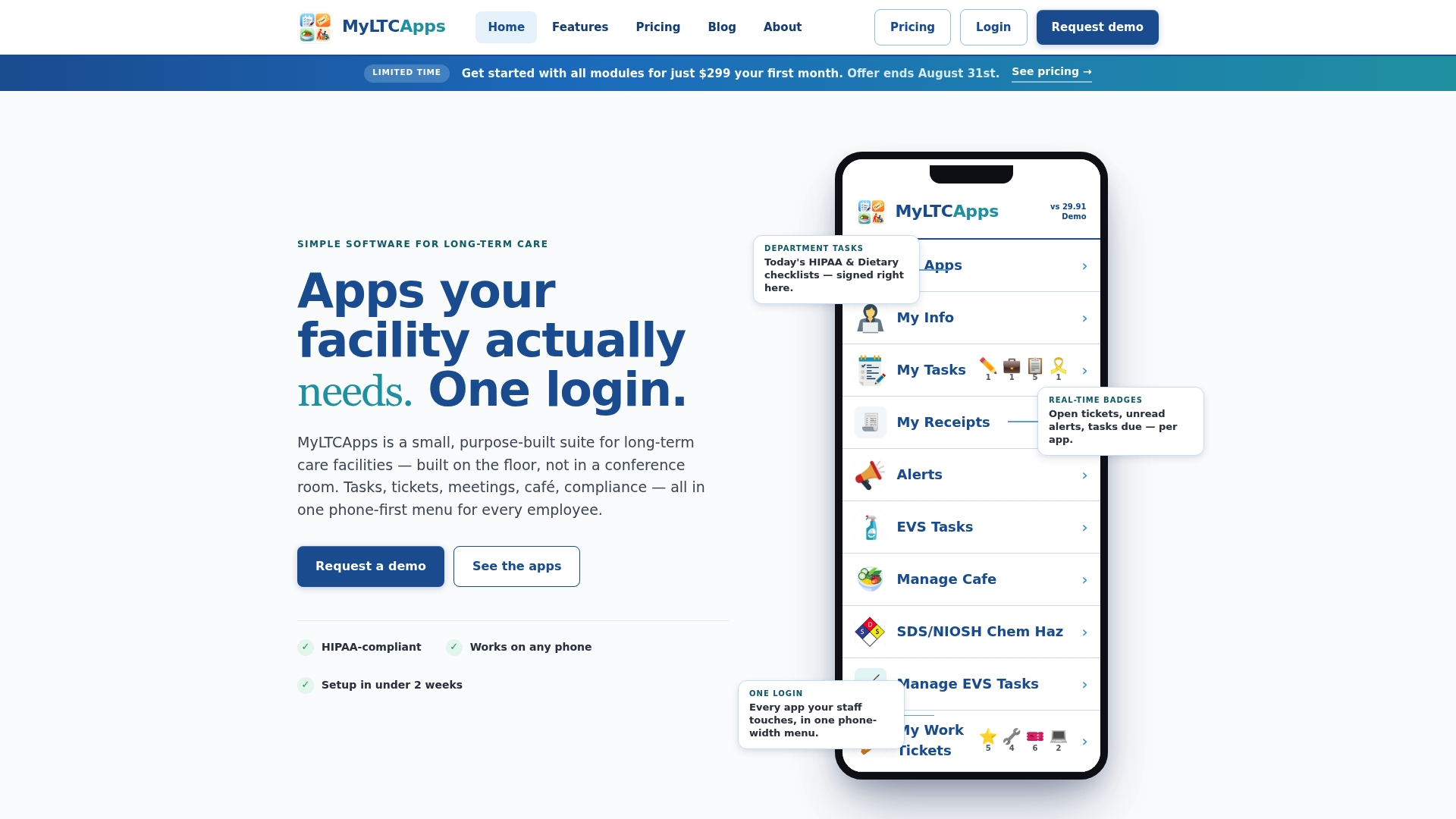
The platform handles phone-first swap requests, automated eligibility and overtime checks, real-time roster updates, and exportable audit logs, so approvals that used to take a day of back-and-forth calls happen from a phone in minutes. If you’re piloting a new swap process, start small: run it on one unit for a full scheduling cycle, track denial reasons and no-show rates, then expand once managers trust the workflow. Explore Myltcapps’s shift scheduling tools or see the full LTPAC operations platform to evaluate what a pilot would look like for your facility.
Frequently Asked Questions About Shift Swap Policies
Is it legal for employees to swap shifts? Yes, private-sector shift swaps are legal, but the employer’s timekeeping must still reflect actual hours worked so overtime calculates correctly under the FLSA. Public agencies have a separate voluntary substitution exception under 29 CFR §553.31.
Does a manager have to approve every shift swap? Yes. Manager approval confirms the swap won’t create overtime, qualification gaps, or coverage shortfalls before the schedule officially changes.
How much notice should employees give for a swap? Most facilities require 24 to 48 hours’ notice, with a documented exception process for genuine emergencies like sudden illness.
Can a manager refuse a shift swap request? Yes, but denials need to rest on consistent, objective criteria like overtime limits or missing certifications, not a case-by-case judgment call that could look discriminatory.
Sources
- Fact Sheet #21: Recordkeeping Requirements Under the FLSA — U.S. Department of Labor
- Shift Trade Form: What to Include and FLSA Rules — LegalClarity
- What is shift swapping? — Heyshift