Refrigerator Temperature Log: Free Templates and Compliance Rules

Refrigerator Temperature Log: Free Templates and Compliance Rules
Download and print a compliant refrigerator temperature log now, and start logging today. The safe range is simple: refrigerators need to stay at or below 40°F, with freezers at 0°F. Grab a template and start tracking within minutes.
- Single unit, one day: print a basic PDF log
- Multiple units or a full month: use an Excel or Word tracker built for rotating shifts
- Want to skip paper entirely? A mobile checklist tool like Myltcapps timestamps every reading automatically and builds an audit trail without anyone chasing down clipboards
The rest of this guide covers exactly what fields to track, how often to check, and how to document a temperature excursion the right way.
Key Takeaways
A compliant refrigerator temperature log requires accurate twice-daily readings, documented corrective actions, and supervisor verification to hold up under audit.
| Point | Details |
|---|---|
| Safe temperature range | Keep refrigerators at or below 40°F and freezers at 0°F at all times. |
| Check frequency | Log readings at least twice daily, more often for high-risk products or after maintenance. |
| Required fields | Include date, time, unit ID, reading, corrective action, initials, and verifier sign-off. |
| Measurement accuracy | Use a freestanding thermometer placed at the warmest spot and calibrate weekly with the ice-point method. |
| Digital alternative | Myltcapps replaces paper clipboards with timestamped mobile checklists and centralized supervisor verification. |
Table of Contents
- Refrigerator Temperature Log Templates: Which Format Fits Your Kitchen
- What a Compliant Fridge Temperature Record Needs to Include
- How Often Should You Check Fridge and Freezer Temperatures?
- How to Measure Refrigerator Temperature Accurately
- What to Do When a Fridge Reads Out of Range
- Why Paper Logs Fall Short and What Replaces Them
- What I’ve Learned About Getting Staff to Actually Use These Logs
- A Faster Way to Keep Every Unit Audit Ready
- Sources
Refrigerator Temperature Log Templates: Which Format Fits Your Kitchen
Not every kitchen needs the same paperwork. A single walk-in cooler needs a different sheet than a facility running six units across three floors.
- Single-day, single-unit PDF. Best for small kitchens or a standalone med-room fridge. Print one per day, clip it to the door, done.
- Weekly or monthly Excel tracker. Better for anyone who wants trend data at a glance. Cells auto-calculate averages and flag out-of-range readings if you build in conditional formatting.
- Consolidated multi-unit log. Facilities running several refrigerators, freezers, and med-room units in different locations need one sheet that lists every unit by name or ID, tracked side by side rather than scattered across separate binders.
A few setup details make a real difference once these sheets hit daily use:
- Laminate the PDF or slide it into a clipboard sheet protector so spills and wet hands don’t destroy a week of data.
- Label every unit with a fixed ID (Fridge 1, Med Room A, Freezer Kitchen) and use that exact ID on the log. It sounds obvious until an inspector asks which fridge “the one by the window” refers to.
- Keep file formats simple. A standard letter-size PDF prints clean on any office printer, and an Excel file under 500 KB opens fast on a shared kitchen tablet.
- If you’re running a med room temperature log alongside kitchen units, keep those sheets visually distinct. A different color header or a bold “MED ROOM” label prevents mixed-up filing during a busy shift.
Match the format to how many people touch the log each day. A single cook checking one cooler doesn’t need Excel formulas. A compliance officer overseeing four units across two buildings does.
What a Compliant Fridge Temperature Record Needs to Include
Auditors don’t grade on effort. They grade on whether the sheet actually proves the fridge stayed safe, and that means specific fields, not a blank chart with a few scribbled numbers.
A defensible log includes:
- Date and time of every check, not just the day
- Unit ID or name, matching the label on the door
- Measured temperature, read directly off the thermometer
- Critical limit for that unit (40°F for fridges, 0°F for freezers), printed on the sheet so staff aren’t guessing
- Corrective action taken, whenever a reading falls outside the limit
- Staff initials, tying each entry to a specific person
- Verifier sign-off, usually a supervisor or manager, confirming the day’s readings
Each field earns its place. Regulatory preventive controls under 21 CFR §117.206 require monitoring frequency, documented corrective actions, and verification records, not just raw numbers. If an inspector finds a fridge that ran warm for six hours, the initials and corrective-action column are what separate a documented, resolved issue from a compliance failure.
Keep completed logs on-site for at least 90 days, and archive them for a year or more in case of a dispute or audit review.
How Often Should You Check Fridge and Freezer Temperatures?
Twice daily is the floor, not the goal. Most food-service guidance calls for checking temperatures at the start and end of each shift at minimum, giving you two data points that catch overnight drift or a door left cracked.
That baseline needs adjusting upward in a few situations:
- High-risk products. Insulin, certain medications, and highly perishable proteins deserve more frequent checks than a fridge full of condiments. Monitoring frequency should track the actual risk of what’s inside, not a flat facility-wide rule.
- Busy service periods. A kitchen fridge opened 40 times during lunch rush loses cold air faster than one opened twice.
- After maintenance or a power event. Any recent outage, compressor repair, or even a delivery day with the door propped open calls for an extra check that afternoon.
Sample schedules that hold up under review: a small kitchen checks at open and close; a med room checks morning, afternoon, and evening given the stakes of medication storage; a large facility with a dedicated compliance officer checks every unit at shift change, three times a day.
Pro Tip: Set a recurring alarm at the exact same times every shift. Inconsistent check times are one of the fastest ways staff drift into skipping entries entirely.
How to Measure Refrigerator Temperature Accurately

A thermometer stuck to the inside wall of the fridge door reads the door’s temperature, not the food’s. That gap causes more false compliance than most managers realize.
Use a freestanding appliance thermometer or a digital probe unit instead of relying on the fridge’s built-in display, which measures the compressor’s target setting rather than actual internal air temperature. For the most stable reading, place the thermometer in a glass of water and let it sit for 5 to 8 hours before checking it. That water bath smooths out the temperature swings that happen every time the door opens.
Placement matters just as much as the tool. Put the thermometer on the top shelf near the door, the warmest spot in most units. If that reading stays at or below 40°F, the rest of the fridge almost certainly does too.
Calibration check: the ice-point method calls for submerging the thermometer stem in a glass of ice water for 30 seconds. It should read 32°F. If it’s off by more than a couple of degrees, adjust or replace it. Weekly calibration keeps you within the ±2°F accuracy range auditors expect.
A few habits keep this process fast:
- Calibrate every thermometer weekly, not just when a reading looks suspicious.
- Replace batteries in digital probes on a set schedule rather than waiting for a dead unit mid-shift.
- Keep a backup thermometer in a drawer. A broken thermometer on a Friday afternoon shouldn’t mean a weekend with no temperature record.
What to Do When a Fridge Reads Out of Range
A single warm reading isn’t automatically a food-safety failure, but how you respond and document it decides whether it stays that way.
- Determine how long the unit has been out of range. Check the last logged reading to estimate duration.
- Move or hold at-risk product. Perishable items that sat above 40°F for more than four hours generally need to be discarded; refrigerated food typically stays safe for about four hours if the door stayed closed during a power loss.
- Log the discovery. Record the time found, the actual reading, the suspected cause (door left open, compressor issue, power outage), and the immediate action taken.
- Verify the fix. Once the unit returns to range, log that follow-up reading and initial it.
- Escalate if needed. Call a maintenance technician for repeat issues, recalibrate the thermometer, and route the incident to a supervisor for sign-off before filing the corrective-action sheet with the daily log.
Why Paper Logs Fall Short and What Replaces Them
Paper logs work until someone forgets to initial a box, a clipboard goes missing during a survey, or a supervisor has to dig through three months of binders to answer one auditor question.
A mobile-first checklist tool built for long-term care, like Myltcapps, replaces that scramble with:
- Timestamped entries logged directly from a phone, so there’s no guessing when a check actually happened
- Automated retention, meaning nothing gets lost in a drawer or thrown out during a cleanout
- Alerts when a reading falls outside the safe range, flagging the issue before it becomes a four-hour problem
- Centralized supervisor verification across every unit and every shift, without chasing down initials
If you’re evaluating a digital option, check its export formats for survey readiness, how it logs calibration checks, and whether it supports the kind of tiered user permissions a facility with multiple shift supervisors actually needs.
What I’ve Learned About Getting Staff to Actually Use These Logs
Compliance fails at the clipboard, not the policy. Laminate the log, mount it directly on each unit with a clear label, and keep the corrective-action steps posted right beside it. Require a manager sign-off at the end of every day. Pair the temperature check with something staff already do at shift handoff, like the fridge inventory count, and the entries stop getting skipped.
— Philip
A Faster Way to Keep Every Unit Audit Ready
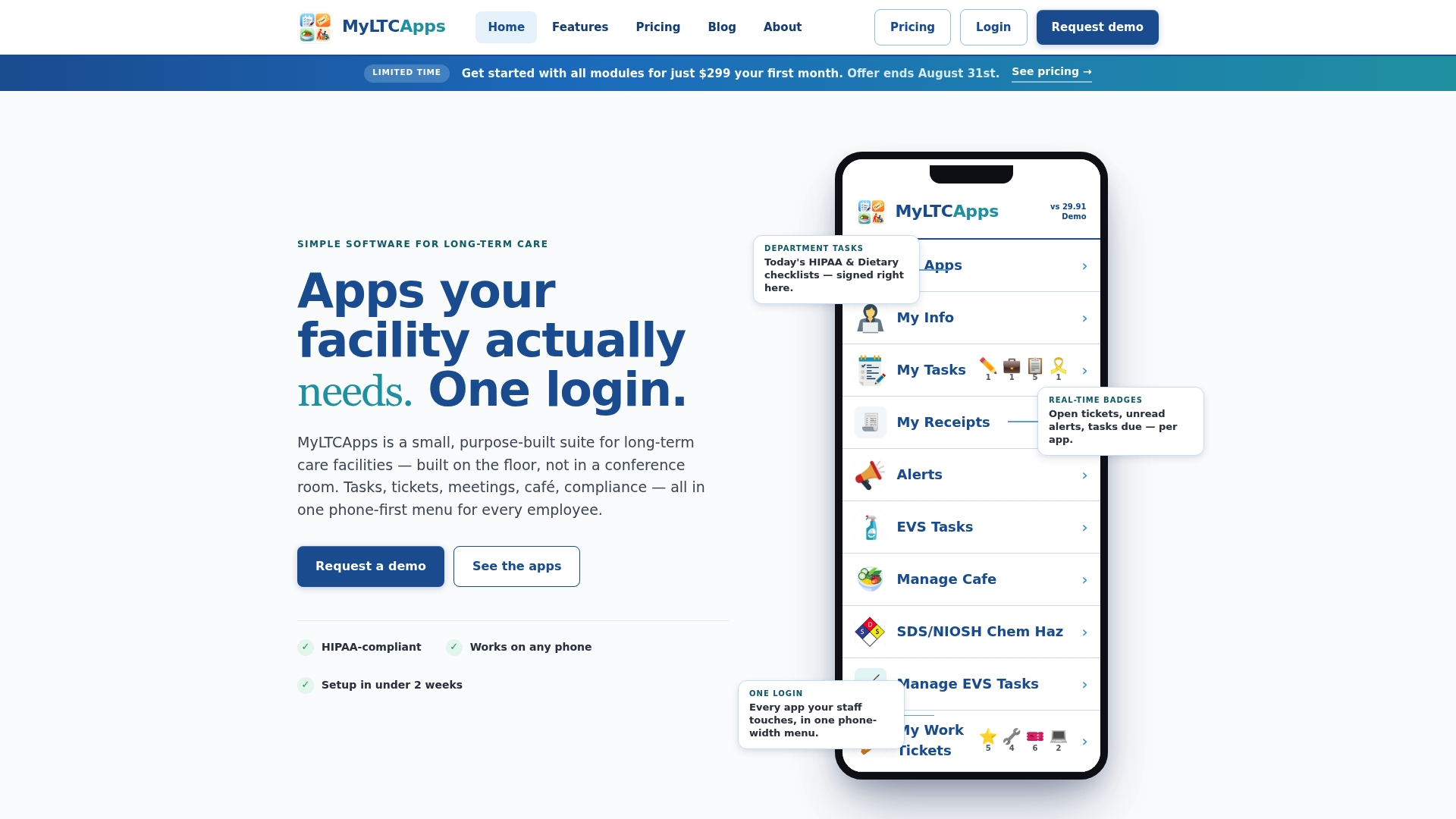
Paper logs and spreadsheet trackers get the job done, but they put the burden on someone remembering to check a clipboard, initial a box, and file the sheet before it gets lost. Myltcapps takes that manual step out of the equation with mobile checklists that timestamp every reading the moment staff enter it, route out-of-range results straight to a supervisor for verification, and keep every record organized for the next survey without anyone digging through binders.
For facilities juggling kitchen units, med rooms, and cafeteria service all under one roof, the cafeteria and dining management tools extend that same tracking into meal service and food-safety checklists. If daily compliance tasks across departments are the bigger challenge, the task and checklist platform handles temperature logs alongside every other recurring duty on the floor. Facilities operating in Kansas can see how the platform lines up with state requirements on the Kansas long-term care page. Request a walkthrough to see how it fits your current logging routine.
Sources
- Appliance thermometers | FSIS
- Refrigerator thermometers: cold facts about food safety | FDA
- 21 CFR § 117.206 — Refrigeration controls (monitoring and records) | Cornell Law
- Cold storage temperature log for multiple units | GSFB (example template PDF)