Refrigerator Cleaning Schedule for Long-Term Care Facilities
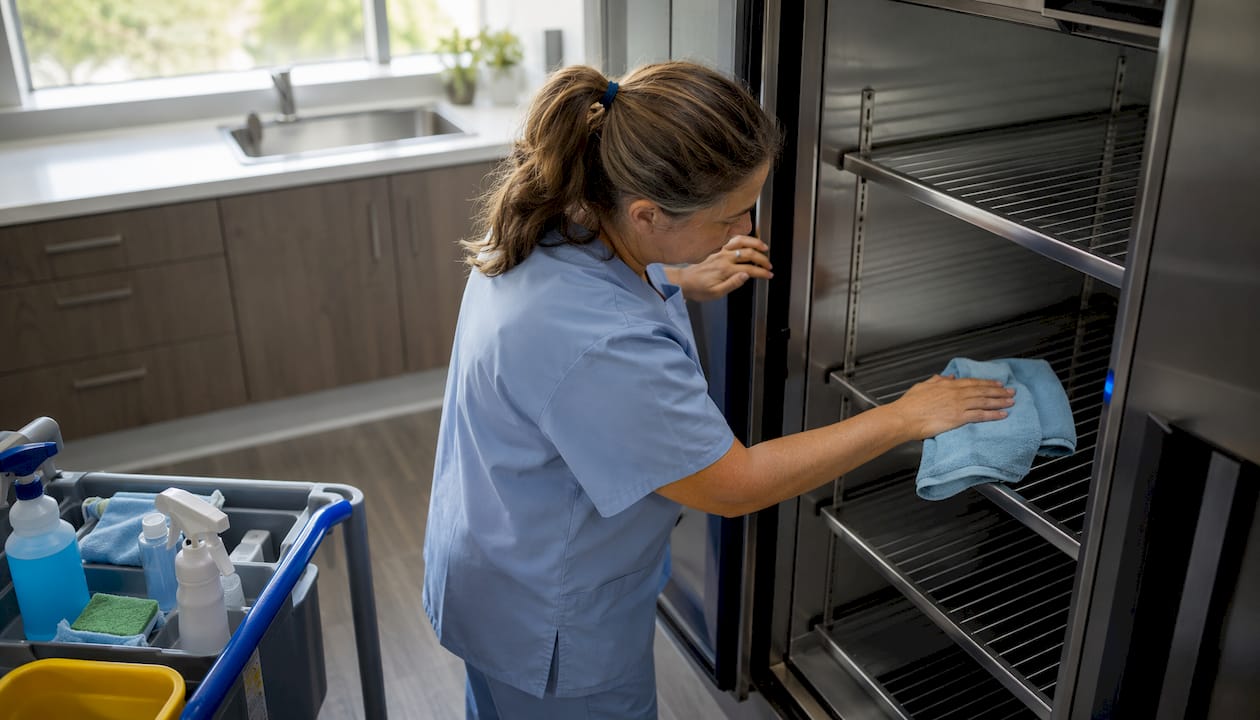
Refrigerator Cleaning Schedule for Long-Term Care Facilities
What does an effective refrigerator cleaning schedule look like?
A compliant refrigerator cleaning schedule for long-term care facilities runs on four tiers: daily, weekly, monthly, and quarterly. Each tier targets different risks, from bacterial growth on surfaces to compressor failure from dirty coils. The FSIS food safety guidelines set the baseline, and 2026 healthcare standards expect documentation at every level.
Here is the core framework at a glance:
- Daily: Verify internal temperature at or below the recommended safety threshold, wipe handles and visible spills, log readings with staff initials
- Weekly: Remove expired items, clean shelves and interior walls, inspect door gaskets for cracks or gaps
- Monthly: Clean floor drains, vacuum condenser coils regularly to prevent buildup, flush drain lines, check door seal integrity
- Quarterly: Full sanitization of all interior components including evaporator coils, fan blades, and drain pans; review temperature logs for trends
Preventive maintenance at the monthly and quarterly level is what separates a compliant facility from one that faces emergency repair costs and potential food spoilage incidents. Skipping coil cleaning, in particular, forces the compressor to work harder and shortens the unit’s lifespan.
How to handle daily and weekly refrigerator cleaning tasks
Daily tasks
Consistency is everything at the daily level. A missed temperature log or an unwiped spill is exactly what a surveyor notices during an unannounced inspection.
- Check the internal temperature using an independent, calibrated thermometer placed in a water-filled container inside the unit. Built-in digital displays alone do not meet compliance standards.
- Log the temperature reading with the date, time, and staff member’s initials.
- Wipe door handles and any visible spills with a food-safe sanitizing solution.
- Confirm that airflow is not blocked by overstocked items.
- Listen for unusual noises that could signal a mechanical issue.
Weekly tasks
Weekly cleaning goes deeper than a surface wipe. Pull everything out of one section at a time to avoid leaving food at unsafe temperatures for too long.
- Remove and discard expired or soon-to-expire items, rotating stock as needed
- Wash shelves and interior walls with a food-safe cleaner and allow them to dry before restocking
- Inspect door gaskets closely for tears, gaps, or buildup that compromises the seal
- Check drain lines for slow drainage or visible clogs
- Wipe down exterior surfaces, including the top and sides where dust accumulates
Pro Tip: Schedule weekly cleaning tasks during slower shift periods, such as Monday mornings, and assign them to a named staff member rather than leaving them as a shared responsibility. Named accountability cuts missed tasks significantly.
A sample fridge cleaning checklist for daily and weekly rounds should include columns for the task name, completion status, staff initials, and any notes on abnormalities found. Mobile-accessible checklists reduce inconsistency far more reliably than memory-based routines.
How to perform monthly and quarterly deep cleaning
Monthly and quarterly deep cleaning is where equipment longevity is won or lost. Regular condenser coil cleaning prevents the refrigerator from overworking, which directly reduces emergency repair calls and food spoilage risk.
Monthly tasks
- Clean the floor inside and around the unit, paying attention to the area beneath the kick plate
- Vacuum condenser coils to remove dust and debris that restrict airflow
- Flush the drain line to prevent blockages to prevent algae buildup and leaks
- Inspect door gaskets and run the dollar-bill test: close the door on a bill and pull. If it slides out without resistance, the seal needs replacement.
- Compare the thermostat reading against your verified thermometer to catch calibration drift
Quarterly tasks
- Remove all food and movable components for a full interior sanitization
- Clean evaporator coils and fan blades using a brush or approved cleaner. Avoid acid-based products.
- Scrub and sanitize walls, floors, and ceilings from top to bottom to prevent cross-contamination of lower surfaces
- Inspect hinges, latches, and door alignment
- Review temperature logs from the past quarter for any recurring drift or anomalies
Abrasive cleaners and excessive moisture near electrical components can damage the unit and create conditions where mold returns quickly. Use non-toxic, food-safe sanitizers that require minimal rinsing.
Pro Tip: Fix your monthly deep clean to the first Monday of each month and your quarterly clean to the first Monday of January, April, July, and October. A fixed calendar date removes the “we’ll get to it” drift that causes lapses.
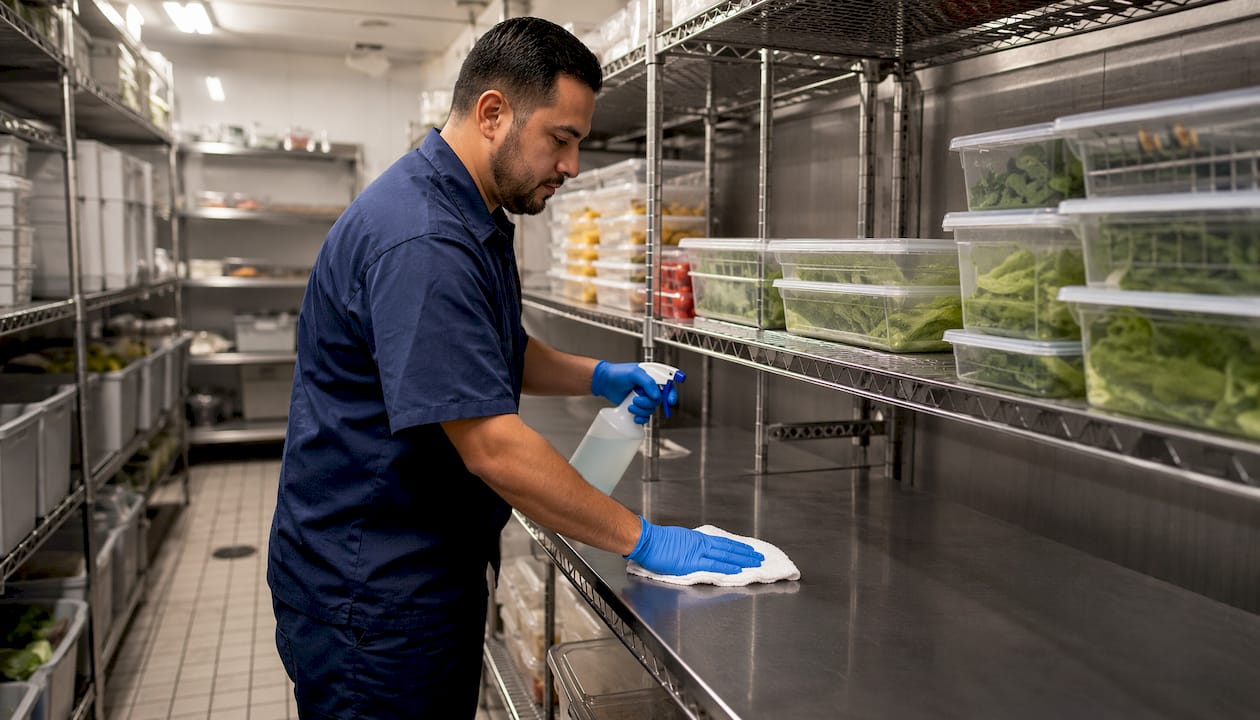
Deep cleaning is a preventive maintenance function, not just a hygiene task. Ice buildup and compressor overheating are both avoidable with a disciplined quarterly schedule.
How to manage staff routines and stay compliant
Documentation is what turns a good cleaning routine into a defensible compliance record. Cleaning logs with timestamps, task details, and responsible staff signatures are the standard surveyors expect in long-term care settings.
Key strategies for consistent compliance:
- Assign each cleaning task to a specific staff role, not just a shift
- Use mobile-first task management to push cleaning reminders directly to staff phones, eliminating the need to check a paper binder
- Log every completed task with a timestamp and the staff member’s name, not just a checkmark
- Build escalation paths for flagged issues, such as a failing gasket or an out-of-range temperature, so maintenance tickets are created automatically
Training matters as much as the checklist itself. Staff need to understand that “clean” in a healthcare setting means reaching corners, crevices, and surfaces that look fine but harbor biofilm. Objective cleanliness standards, not subjective impressions, are what training should reinforce. Facilities that track in-service attendance for cleaning protocol training have a clear paper trail when surveyors ask who was trained and when.
A calendar-based system, where tasks are pre-assigned to specific dates and staff rather than left to whoever is available, reduces missed tasks and creates the audit trail that supports inspection readiness.
Cleaning guidelines for walk-in coolers and reach-in refrigerators
Walk-in coolers and reach-in units share the same frequency tiers but differ in scale and technique.
Walk-in cooler cleaning
Walk-in coolers used in long-term care dining and medication storage require daily attention to floors, spills, and temperature logs. Weekly, staff should remove shelving to clean underneath and behind it, wash shelves with a food-safe cleaner, and inspect door seals for wear. Monthly deep cleaning means removing all food and movable equipment, scrubbing walls, floors, and ceilings, flushing drains, and inspecting evaporator covers. For a walk-in cooler cleaning schedule, the minimum standard is daily upkeep, weekly cleaning, and monthly deep cleaning. High-volume kitchens may need more frequent deep cleaning cycles.
Reach-in refrigerators
Reach-in units are easier to access but get touched more frequently, which means handles and gaskets accumulate contamination faster. Daily wipe-downs of handles and spill areas are non-negotiable. Shelves and drawers should be removed and washed in warm, soapy water at least quarterly, and condenser coils should be vacuumed every six to twelve months depending on the environment. Dusty or high-traffic kitchen settings warrant more frequent coil cleaning, closer to every four to six months.
Both unit types require the same documentation standards: logged temperatures, signed task records, and flagged maintenance issues with follow-up dates.
Key Takeaways
A structured refrigerator cleaning schedule in long-term care facilities requires daily temperature logging, weekly inventory control, monthly coil and drain maintenance, and quarterly full sanitization to meet 2026 compliance standards.
| Point | Details |
|---|---|
| Daily temperature logging | Use a calibrated independent thermometer; built-in displays alone do not meet compliance standards. |
| Weekly inventory and surface cleaning | Remove expired items, wash shelves, and inspect gaskets every week without exception. |
| Monthly coil and drain maintenance | Vacuum condenser coils and flush drain lines monthly to prevent compressor failure and mold. |
| Quarterly full sanitization | Clean all interior components top-down, including evaporator coils and fan blades, every quarter. |
| Myltcapps for compliance tracking | Myltcapps mobile checklists and task logs create the timestamped, signed records surveyors expect. |
Why most facilities underestimate refrigerator cleaning
The conventional wisdom treats refrigerator cleaning as a hygiene task. In long-term care, it is a compliance function, an equipment maintenance program, and a food safety protocol all at once. Facilities that treat it as just one of those three tend to fail on the other two.
What gets overlooked most often is the documentation gap. A facility can have spotless shelves and still fail an inspection because no one logged who cleaned what and when. Surveyors in Kansas and across the country are not just looking at the unit. They are looking at the record. A clean fridge with no paper trail is, from a regulatory standpoint, an uncleaned fridge.
The other underestimated factor is the mechanical side. Condenser coil cleaning is not glamorous, but it is the single maintenance task most directly tied to equipment lifespan and energy efficiency. Facilities that skip it for a year or two often face compressor failures at the worst possible time, typically during a summer heat event when the unit is already working at capacity.
Structured schedules, assigned accountability, and digital logs are not bureaucratic overhead. They are what keep residents safe, equipment running, and surveyors satisfied.
Myltcapps keeps your cleaning records survey-ready
Kansas long-term care facilities face real pressure to maintain compliant refrigerator cleaning records, and paper binders do not cut it when a surveyor walks in unannounced. Myltcapps gives your staff a phone-first platform where cleaning tasks are pre-assigned, timestamped automatically, and signed off with a tap.
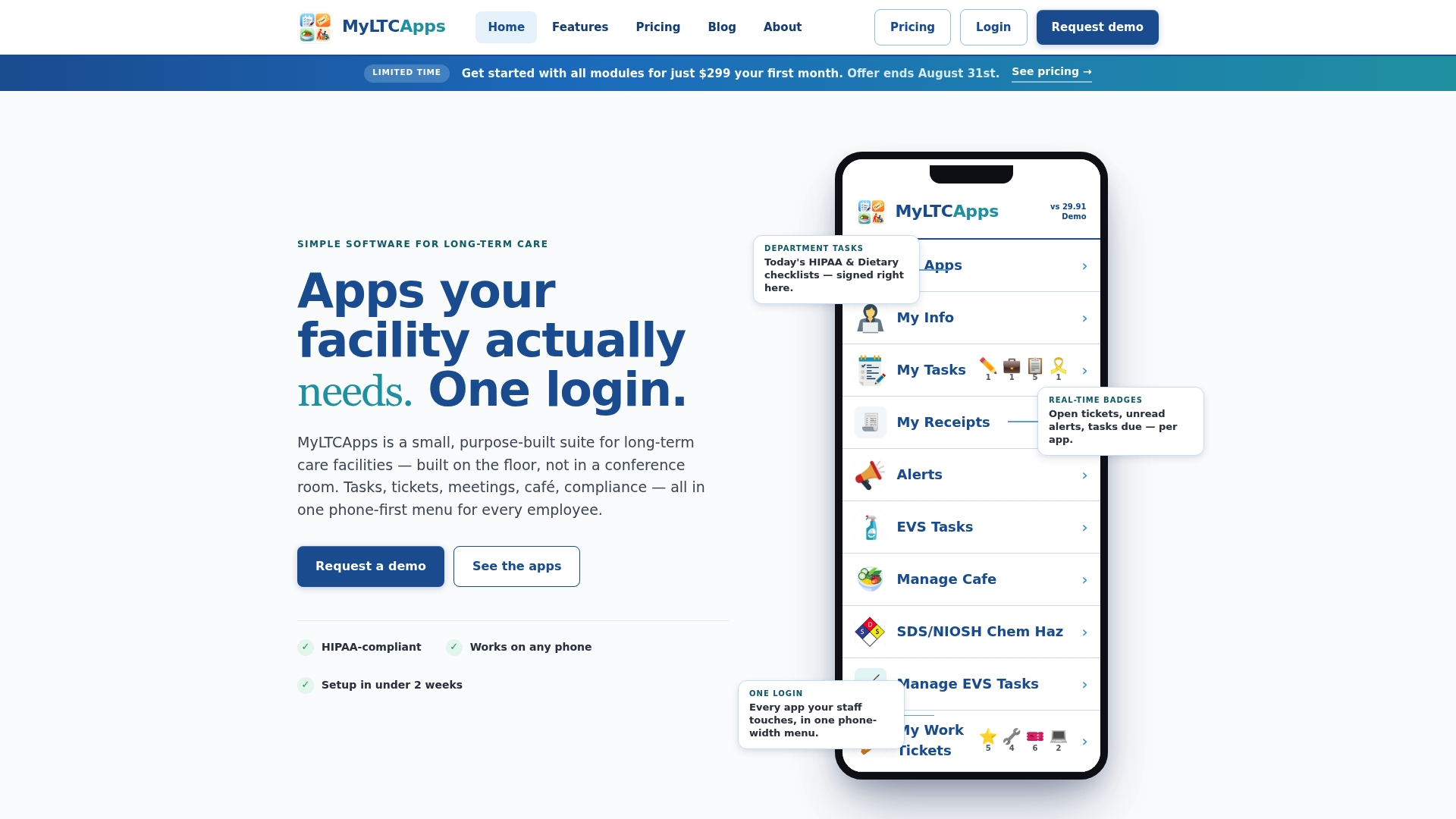
The daily checklist software covers every tier of your cleaning schedule, from daily temperature logs to quarterly deep clean sign-offs, with built-in compliance tracking that exports surveyor-ready reports. The EVS task management module lets supervisors assign refrigerator cleaning tasks to specific staff, track completion in real time, and flag maintenance issues directly to a work ticket. No chasing paper. No wondering if the coils got vacuumed last month.
If your facility is in Kansas, Myltcapps is built for KDADS-ready operations. Request a quote and see how the platform fits your specific workflow.