6 Step Compliance Playbook for LTC Emergency Contact Directories

6 Step Compliance Playbook for LTC Emergency Contact Directories
An emergency contact directory for a long-term care facility is an internal roster of resident representatives and staff emergency contacts, tied directly into the facility’s emergency preparedness communication plan. The right setup is searchable, role-restricted, encrypted, auditable, and exportable to a printable format for use when systems go down. Federal rules under 42 CFR §483.73 require it. HIPAA governs who can see it. Platforms like MyLTCApps are built to run it.
TL;DR:
- Contact information for residents’ legal representatives, staff, medical providers, vendors, and external agencies must be comprehensive, regularly verified, and include multiple communication methods.
- HIPAA protections apply to resident-linked contacts, requiring strict access controls, encryption, audit logs, and documented policies for authorized use and sharing during emergencies.
- The directory should be owned by dedicated teams, updated quarterly or at least annually, with clear logs and procedures for unreachable contacts to ensure accuracy.
- In emergencies, a dual approach of digital access via secure cloud and a printed backup at a designated location is essential for reliable retrieval when systems fail.
- Surveyors expect proof of ongoing training, regular drills, and an audit trail demonstrating the directory’s practical use and maintenance, not just its existence.
Table of Contents
- What Belongs in an Emergency Contact Directory?
- Does HIPAA Apply to an Emergency Contact List?
- Who Should Keep the Emergency Contacts List Current?
- How Do You Access the Directory When Systems Go Down?
- What Do Surveyors Expect to See?
- How Fast Can You Build a Compliant Directory?
- An Administrator’s View: Where Directories Usually Break
- Get a Directory That Meets Every Requirement, Not Just Some of Them
- Sources
What Belongs in an Emergency Contact Directory?
Federal preparedness rules don’t leave the contents up to guesswork. Under 42 CFR §483.73, your communication plan must name staff, residents’ physicians, other facilities, and specific external agencies, with contact information for each. That means your directory needs to cover more ground than most facilities initially assume.
Build it around these categories:
- Resident-side contacts: authorized representatives, next of kin, and legal decision-makers, each flagged with their authorization level
- Staff: every on-duty employee plus their own personal emergency contact, tagged by department and shift
- Medical partners: each resident’s attending physician and any specialists tied to active care plans
- Vendors and service entities: pharmacy, dietary supplier, transport contractor, IT support
- External agencies: local emergency management, the State Long-Term Care Ombudsman, and your state licensing or certification body
For each person, capture full name, relationship or role, primary and alternate phone numbers, email, preferred contact method, an authorization flag, the date last verified, and where relevant, escalation order. Templates from groups like LeadingAge Illinois recommend two numbers, a landline and a cell, per contact whenever you can get them, since cell towers and landlines fail differently during storms and outages. Layer in operational metadata, too: unit or department tags, shift association, language preference, and a consent flag for sharing status during evacuation. That metadata is what turns a static list into something incident command can actually use for a fast call-down.
Does HIPAA Apply to an Emergency Contact List?
Yes, once a contact entry is linked to a specific resident, it counts as protected health information under HIPAA, and the HHS Privacy and Security Rules apply in full. That single fact should shape almost every technical decision you make about how the directory is built and who can open it.
Practical safeguards to put in place:
- Role-based access control so a dietary aide can’t pull up a resident’s next-of-kin phone number, but a charge nurse or administrator can
- Encryption at rest and in transit, not just a password on a shared spreadsheet
- Strong authentication for anyone accessing the directory remotely
- Audit logs that record who viewed or edited each entry, and when
- Least-privilege provisioning, meaning new hires get only the access their role requires, nothing broader
- A signed business associate agreement with any software vendor that stores or processes this data
Your policy also needs to spell out who counts as an “authorized user” and document that list separately from the directory itself. There’s an important carve-out here: 45 CFR §164.510 allows limited disclosure of a resident’s location or general condition during a disaster, even without full authorization, but that allowance has limits and doesn’t open the door to sharing everything.
Pro Tip: Write your limited-release procedure down before an emergency happens, not during one. Staff freeze under pressure, and a one-page laminated procedure at the nursing station beats trying to remember HIPAA exceptions during an actual evacuation.
Who Should Keep the Emergency Contacts List Current?
A directory that nobody owns goes stale within weeks. Assign the job explicitly, and put it in writing.
- Assign resident-contact ownership to admissions or social work. They already collect this information at intake, so verification becomes an extension of a process that exists already, not a new one.
- Assign staff-contact ownership to HR or scheduling. New hires, terminations, and personal contact changes flow through those teams naturally.
- Name a verifier for every change. Whoever updates an entry should be identifiable in the record, not anonymous.
- Set a verification cadence: confirm resident contacts at admission and again during the facility’s annual emergency-plan review; confirm staff contacts at hire and through a quarterly sync.
- Log every edit with a timestamp and the verifier’s name. Surveyors will ask for this, and a clean, exportable change log answers the question before it’s fully asked.
- Build a process for unreachable or non-responsive contacts. Three failed attempts should trigger an escalation to a backup contact or a documented note in the resident’s file, not silence.
Facilities that treat this as a recurring task tied to existing workflows, admissions paperwork and HR onboarding, keep far cleaner records than those that schedule a once-a-year manual audit and hope nothing changed in between.
How Do You Access the Directory When Systems Go Down?
Power outages, internet failures, and full-facility evacuations are exactly when this directory matters most, and exactly when a cloud-only setup can fail you. Redundancy isn’t optional here.
- Keep a secure cloud portal with role-based access as your primary system for daily use and routine lookups
- Maintain a terminal or workstation at your facility’s Emergency Operations Center with local access to the same data
- Print a quick-reference roster and store it at your designated alternate operations location, updated on the same cadence as the digital version
- Build a controlled-release template in advance for sharing limited resident location or condition data with receiving facilities or family, consistent with the federal allowances under 45 CFR §164.510
- Connect the directory to your facility’s call-down system so incident command can trigger notifications without hunting for numbers manually
State-level emergency operations templates, like the ones published by the North Dakota Long Term Care Association, consistently recommend this dual approach of secure digital access paired with a printed backup, as detailed in Emergency & Crisis Resources to ensure preparedness in every situation. Facilities that skip the paper copy tend to learn why it matters the hard way, usually during the exact event when they needed it most.
What Do Surveyors Expect to See?
Documentation is where good intentions turn into evidence, or fall apart under scrutiny. Surveyors aren’t just checking whether a directory exists. They’re checking whether you can prove it works.
- Initial training for new staff on how to use the directory and what the access policy allows
- Annual refresher training for existing staff, documented with sign-in rosters
- At least one drill or tabletop exercise per year that actually uses the directory, not just references it
- A written record of what the exercise revealed, including any contacts that were unreachable or entries that were out of date
- Corrective actions taken after each drill, with dates attached
42 CFR §483.73 requires the communication plan to be reviewed and updated at least annually, and that review should include a hard look at directory accuracy, not just a signature on a checklist. Surveyors increasingly expect proof that the directory was stress-tested in an exercise, since a list that only exists on paper and has never been used in a drill tells them very little about whether it will hold up in a real event.
How Fast Can You Build a Compliant Directory?
You don’t need a six-month project plan to get a working directory in place. Here’s a realistic first week, with the compliance groundwork layered in over the following two months.
- Day 1: Designate a single owner for the directory and confirm resident and staff contact ownership assignments.
- Days 2 to 3: Compile existing contact data from admissions files and HR records into one working list.
- Day 4: Add the required fields, relationship, alternate number, last-verified date, and authorization flag, to every entry.
- Day 5: Set role-based permissions so access matches job function, not convenience.
- Day 6: Generate a secure, printable export and store a copy at your alternate operations location.
- Day 7: Schedule your first verification pass and put a tabletop drill on the calendar within 60 days.
By day 30, document your annual review policy in writing. By day 60, run the first drill and log the results. By day 90, you should have a full audit trail: who updated what, when, and who verified it.
Pro Tip: Don’t wait for a perfect system before you start. A spreadsheet with the right fields and clear ownership, launched this week, beats a flawless platform that’s still “in planning” six months from now.

An Administrator’s View: Where Directories Usually Break
The failures I keep seeing aren’t complicated. They’re almost always structural, not technical.

No single owner is the biggest one. When resident-contact updates live with admissions and staff updates live with HR, but nobody owns the merged directory, entries rot quietly until an emergency exposes them. Outdated numbers are the second failure, usually traced back to a missing verification cadence rather than carelessness. Too-broad access is the third, and it’s the one that creates real HIPAA exposure. Giving every staff member full directory access feels convenient until an auditor asks why a dietary aide could view a resident’s legal guardian’s phone number.
The fixes are unglamorous but effective: a daily verification checklist at admissions, a locked printable roster at the alternate ops location, and mobile access scoped tightly by role. None of that requires new technology. It requires a system that enforces the discipline your policy already claims to have. A platform like MyLTCApps makes that enforcement automatic instead of aspirational, which is exactly the gap between a directory that looks compliant and one that survives a survey.
— Philip
Get a Directory That Meets Every Requirement, Not Just Some of Them
MyLTCApps is built specifically for the compliance gap most spreadsheets and generic contact apps can’t close: role-based access that actually enforces itself, encrypted storage, exportable rosters for offline use, and an audit trail that answers a surveyor’s question before they finish asking it.
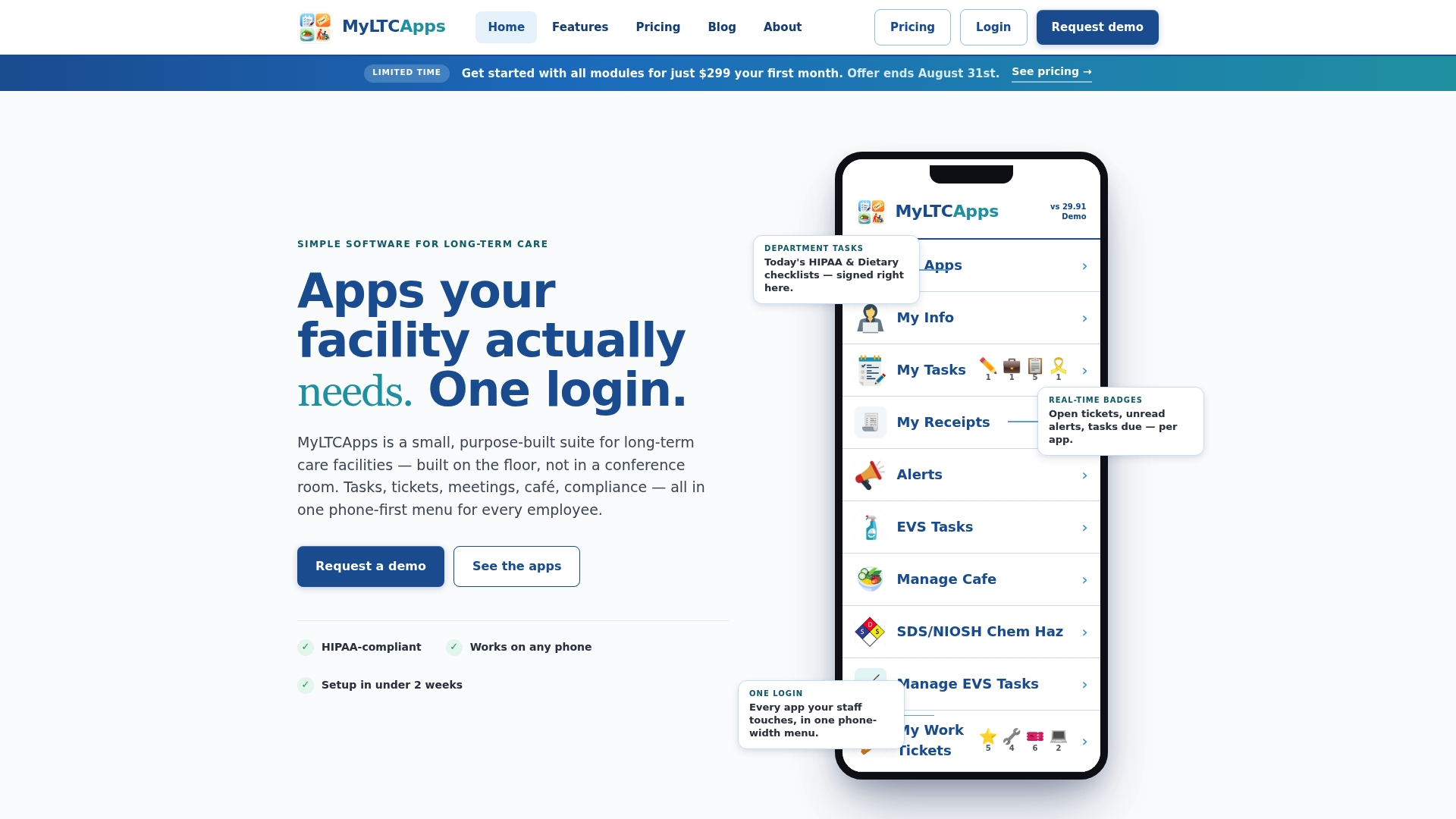
The employee directory and role-based access module was built around the exact fields and permission structure this article walks through, tied into the same platform that handles facility alerts and call-downs so your emergency communication plan and your contact roster live in one place instead of three disconnected systems. Facilities in Kansas can also see how the platform lines up with state-specific requirements through the KDADS-ready long-term care software page. If your current setup is a shared spreadsheet with no access controls and no audit log, request a demo of the directory module and see what a survey-ready version actually looks like.
Sources
- HIPAA for professionals: laws & regulations | HHS
- § 483.73 - Emergency preparedness. | govinfo
- Long Term Care Requirements (ASPR TRACIE)