Calorie Count Sheets: A Compliance Checklist for LTC Staff

Calorie Count Sheets: A Compliance Checklist for LTC Staff
A calorie count sheet is the resident-level intake record that long-term care staff use to track exactly what a resident eats and drinks, meal by meal, so dietitians and surveyors can verify nutrition status against care plan goals. When a resident’s intake drops below 75% of meals served, or documented weight loss crosses CMS thresholds, staff should start a formal calorie count immediately, not wait for the next care conference.
That single action, done consistently, is what separates a facility that catches malnutrition early from one that explains a weight-loss citation to a surveyor.
- Definition: A calorie count sheet logs meal-by-meal intake (percent or points), route, supplements, and assistance level for a specific resident over a defined period.
- Trigger: Start one when intake falls under 75% of meals or weight loss hits CMS-defined percentages.
- Backing: Grounded in CMS Nutrition SOM guidance and peer-reviewed intake-accuracy research.
- Operational option: Mobile platforms like MyLTCApps can timestamp entries and export records for survey review.
Key Takeaways
Accurate calorie count sheets combine objective recording methods, complete required fields, and prompt documentation to meet CMS thresholds and protect resident nutrition status.
| Point | Details |
|---|---|
| Start counts at 75% | Begin a formal calorie count when intake drops below 75% of meals served. |
| Watch weight thresholds | Escalate at 5% loss in 1 month, 7.5% in 3 months, or 10% in 6 months. |
| Fix the estimation gap | Visual estimates tend to overestimate intake, so audit with weighed or photo checks. |
| Document supplements | Between-meal supplements can add 250 to 300 calories daily and must be logged separately. |
| Use mobile capture | MyLTCApps supports timestamped, required-field intake tracking and survey-ready exports. |
Table of Contents
- Why Calorie Count Sheets Matter for Clinical Risk and Compliance
- What Belongs on a Calorie Count Sheet
- How to Record Intake Without Overestimating It
- When to Start a Formal Calorie Count
- How Mobile Systems Streamline Calorie Count Capture
- Training Staff to Keep Counts Reliable
- Building a Simple Calorie Count Template
- Getting Calorie Counts Right Takes Culture, Not Just Forms
- Where MyLTCApps Fits Into Your Nutrition Workflow
- Frequently Asked Questions
- Sources
Why Calorie Count Sheets Matter for Clinical Risk and Compliance
Staff usually estimate meal intake by a visual approximation method in most buildings, and it’s less reliable than most people assume. A peer-reviewed study of nursing home meal intake found that staff visual estimates overestimate actual consumption by a moderate percentage compared to weighed measurements. That gap isn’t trivial. It’s the difference between flagging a resident for a registered dietitian nutritionist (RDN) referral and letting a slow decline go unnoticed for weeks.
CMS ties documentation directly to survey outcomes. Facilities must assess nutritional status and estimate calorie, protein, and fluid needs, and CMS guidance sets specific weight-loss thresholds that should trigger intervention:
- 5% loss in 1 month
- 7.5% loss in 3 months
- 10% loss in 6 months
Cross one of these lines without a documented response, and surveyors have grounds to cite the facility. Accurate counts feed RDN referrals, care-plan revisions, and QAPI review, turning a paper trail into an actual clinical safeguard rather than a compliance chore.
What Belongs on a Calorie Count Sheet
A calorie count sheet earns its keep only if it captures enough detail to support a clinical decision, not just a checkbox for the surveyor file. Skimpy sheets create gaps that show up during a nutrition-focused survey, so build the form around what a dietitian actually needs to calculate intake and act on it.
Core intake fields, in the order they should appear:
- Resident identifier and room number
- Date and time of each meal or snack
- Meal or snack type (breakfast, lunch, dinner, HS snack)
- Item-level intake, recorded as percent consumed or points
- Route (oral, enteral, or combination)
- Supplements or fortified foods, with quantity
- Assistance level provided (independent, setup, hand-over-hand, total)
- Staff initials for the observer and, separately, the person who assisted
Clinical context worth adding alongside the raw numbers:
- Current weight and any recent change flagged
- Relevant medications affecting appetite or swallowing
- Documented food preferences or texture modifications, which connects directly to broader texture-modified diet planning
A few habits separate a usable sheet from a liability. Record intake immediately after the meal, not at the end of a shift when memory has already blurred three trays into one estimate. Distinguish clearly between who observed the meal and who provided physical assistance. Those aren’t always the same staff member, and blending the two roles into one signature line creates ambiguity a surveyor will notice.
How to Record Intake Without Overestimating It
Staff tend to round up, especially during busy meal service when a quick glance replaces a careful look.
Point systems offer a slightly more structured alternative: assign point values to specific portions (a slice of bread, a scoop of vegetables) and convert to a percentage at the end. This forces a more deliberate look at the tray instead of a single overall impression, though it still relies on staff judgment.
Two more objective methods close the accuracy gap further:
- Weighed intake: weigh the plate before and after the meal, then calculate consumption by difference. This is the gold standard for residents on formal counts but too labor-intensive for routine use across an entire unit.
- Photo documentation: photograph the tray before and after, then have a clinician or trained staff member review the images. This works well as a periodic accuracy check without adding weighing equipment to every meal cart.
Combine methods based on risk. Use the percentage or point method for daily tracking, and reserve weighed or photo methods for residents already on a formal calorie count or for random accuracy audits.
Pro Tip: Keep a laminated card with standard portion photos taped to each meal cart. Staff comparing a real plate against a reference image estimate percentages far more consistently than staff working from memory alone.

Timing matters as much as method. Record intake within minutes of meal completion, before the next task pulls attention away. A calorie count sheet filled in from memory two hours later isn’t a record. It’s a guess with a signature attached.
When to Start a Formal Calorie Count
Three signals should prompt a formal count without waiting for a scheduled care conference:
- Intake consistently below 75% of meals served over several days
- Weight loss matching or approaching the CMS thresholds noted above
- A noticeable change in appetite, chewing, swallowing, or the level of assistance a resident suddenly needs
Once a count starts, the sequence matters. Notify the RDN or attending physician, calculate estimated calorie and protein needs, document the specific intervention chosen (fortified foods, between-meal supplements, texture changes), and set a defined reassessment date rather than an open-ended “monitor.”
Supplement and snack interventions have measurably increased daily intake in controlled comparisons, adding roughly 250 to 300 calories per resident per day compared with usual care. That’s exactly the kind of intervention a well-documented count should justify and track. The count itself becomes the evidence trail showing surveyors why an action was taken and what happened next.
How Mobile Systems Streamline Calorie Count Capture
Paper sheets sitting on a clipboard for a full shift are where accuracy erodes. By the time someone transcribes six trays’ worth of estimates from memory, the numbers have already drifted. Mobile-first capture closes that gap by putting the form in a staff member’s pocket at the point of care.
A phone-first workflow, the kind MyLTCApps is built around, timestamps each entry the moment it’s logged, attaches a photo when needed, and blocks submission until required fields like route and assistance level are filled in. That last piece matters more than it sounds. A missing signature or a blank supplement field is exactly what turns a routine nutrition review into a longer survey conversation.
- Real-time entry reduces the lag between observation and documentation
- Required-field validation catches gaps before they become chart deficiencies
- Automated alerts can flag low intake to the RDN or charge nurse the same shift, not the next morning
- Exportable reports map directly to Nutrition Critical Element Pathway documentation, saving hours during survey prep
For facilities already using cafeteria and dining management workflows, tying meal tracking to the same platform residents’ supplement orders run through keeps the whole intake picture in one place instead of scattered across paper and spreadsheets.
Key Takeaways
| Point | Details |
|---|---|
| Timestamped entries | Log intake within minutes of the meal, not at the end of a shift. |
| Required fields | Enforce route, assistance level, and supplement fields before submission. |
| Photo backup | Attach photos for periodic accuracy audits against staff estimates. |
| Survey-ready exports | Generate reports that map to Nutrition Critical Element Pathway needs. |
| Operational fit | MyLTCApps supports resident meal tracking and reporting without adding charting complexity. |
Training Staff to Keep Counts Reliable
Accuracy on paper starts with training, not forms. New staff need hands-on practice estimating percentages against real plates, clear rules on when to escalate to weighing or photos, and a firm habit of logging route and assistance level every single time, not just when it seems relevant.
- Train new hires on percent and point estimation using standard portion references
- Set clear criteria for when a weighed or photo-documented count is required
- Run periodic inter-rater exercises where two staff estimate the same tray independently and compare results
- Conduct supervisor spot checks against weighed audits at least monthly
- Define a retention policy for count sheets so records are available if a surveyor requests them
Pro Tip: *Run inter-rater checks quarterly, not just after a survey citation.
Building a Simple Calorie Count Template
Keep the template compact enough that staff will actually fill it out at the bedside. A single row per meal works better than a dense multi-column form nobody wants to touch mid-shift.
- Row structure: Date | Meal | Item % or points | Route | Supplement (qty) | Assistance level | Staff initials
- Sample entry: 3/14 | Lunch | 75% | Oral | Ensure 120mL | Setup | J.R.
- Checklist before filing: every meal for the period logged, no blank assistance fields, supplements quantified not just checked off, weight and any change noted on the header row
Adjust the template for enteral feeds by adding formula rate and volume columns, and for supplement-heavy residents by breaking out each product separately rather than lumping them into one line.
Getting Calorie Counts Right Takes Culture, Not Just Forms
Rolling out better calorie count sheets works best as a pilot, not a facility-wide mandate on day one. Start with one unit, train hard on estimation and required fields, audit against weighed measurements after two weeks, then scale what worked.
The biggest mistake I see is treating a low intake number as a staff failure instead of clinical information. Facilities that punish “bad numbers” get inflated numbers right back. Focus on accuracy, not blame, and the data gets honest fast.
Where MyLTCApps Fits Into Your Nutrition Workflow
Paper calorie count sheets get lost in laundry carts, left in break rooms, or filled in from memory at the end of a shift. MyLTCApps is built to fix exactly that gap for facilities that are done chasing down missing sheets before a survey.
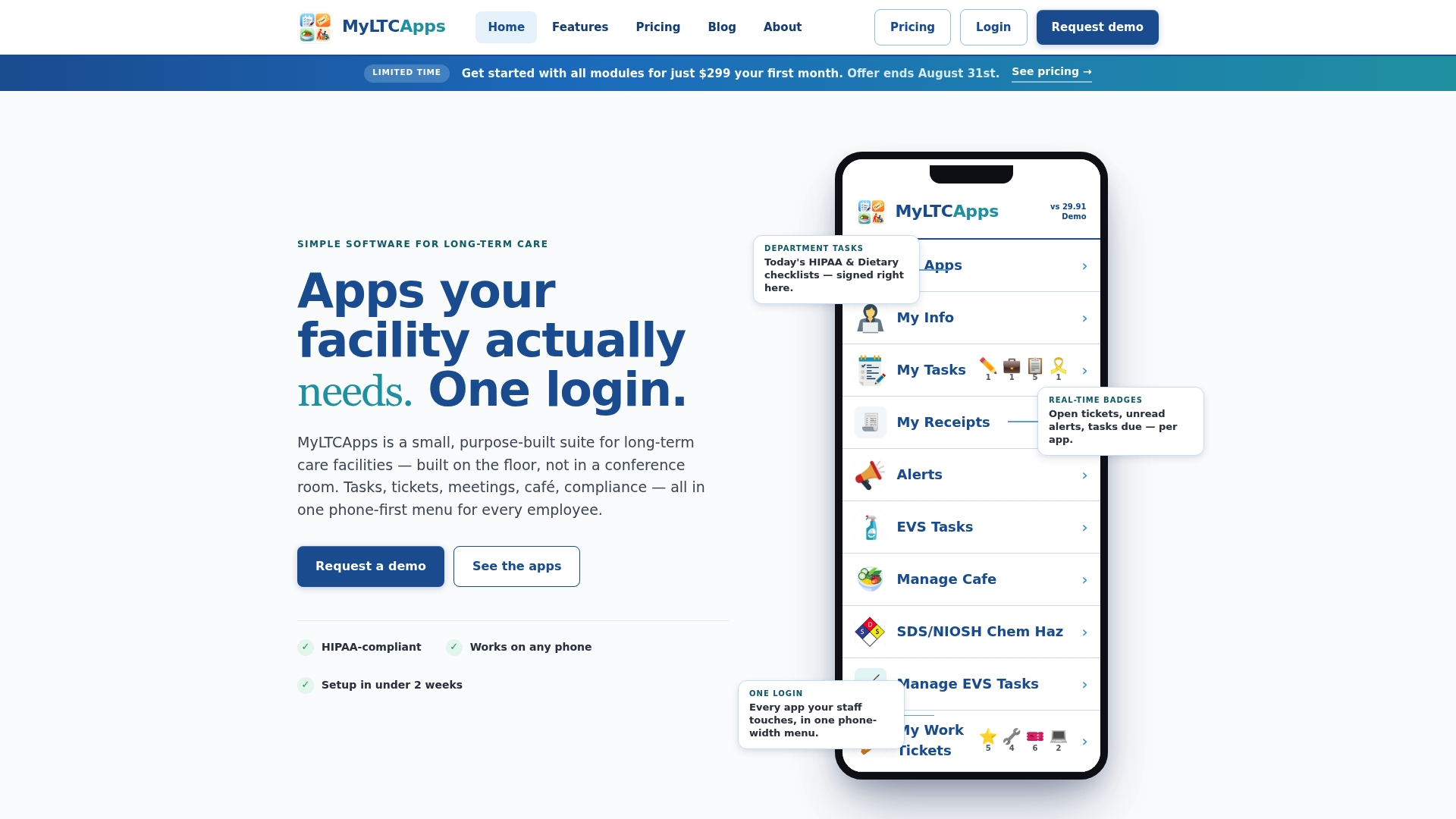
The platform supports resident meal tracking with timestamped entries, required-field checks that catch a missing supplement or assistance-level entry before it becomes a chart deficiency, and report exports formatted for survey review. It connects to cafeteria and payroll-deduct dining workflows so meal orders and intake tracking live in the same system, and it handles resident data with the same privacy discipline covered in a HIPAA compliance checklist for long-term care. This is operational task and reporting software, not a clinical charting system, and it’s designed to sit alongside your existing nutrition assessment process rather than replace it.
If your team is still reconciling paper sheets against MDS deadlines, take a look at the compliance task and checklist tools MyLTCApps offers and see how a mobile-first setup fits your unit’s workflow.
Frequently Asked Questions
What is a calorie count sheet used for in long-term care? It tracks a resident’s meal-by-meal intake, including percent consumed, route, and supplements, so staff can identify inadequate nutrition and document interventions for care planning and survey review.
How often should calorie count sheets be completed? Once a formal count starts, log every meal and snack for the observation period, typically 3 to 7 days, with entries recorded immediately after each meal rather than at shift’s end.
What intake percentage triggers a calorie count in a nursing home? Intake consistently below 75% of meals served is a common trigger for starting a formal count and notifying the RDN or attending physician.
Are paper calorie tracking sheets still acceptable for compliance? Paper sheets can meet documentation requirements, but they’re more prone to gaps and estimation errors than mobile systems that enforce required fields and timestamp entries automatically.

How do calorie count sheets connect to MDS documentation? Data from calorie counts feeds directly into MDS nutritional status sections and the Nutrition Critical Element Pathway, giving surveyors evidence of ongoing monitoring and intervention.
Sources
- Accuracy of patient care staff in estimating and documenting meal intake of nursing home residents
- CMS Manual System R36SOMA
- Effects of nutritional supplement and snack interventions on caloric intake in LTC residents (PMC article)
- Documenting meal intake in nursing homes: CMS rules and accuracy (LegalClarity summary)