File Same Shift Skin Tear Reports in LTC With Mobile Checklists

File Same Shift Skin Tear Reports in LTC With Mobile Checklists
When a skin tear happens, classify it using the ISTAP system, control bleeding, and gently preserve the flap without sutures or staples. Photograph the wound with consent, measure the visible wound bed only, and file an incident report the same shift. Include ISTAP DC-Tool fields where you can, then route the report to a wound clinician for follow-up.
TL;DR:
- Control bleeding within 10 to 15 minutes using gentle pressure and elevation, escalating immediately if bleeding persists.
- Use the ISTAP classification to assess skin tears, noting flap viability and exudate, with prompt clinician review for Type 3 tears.
- Document detailed incident information, including mechanism, location, flap status, and medications, and map reports to standardized templates for consistency.
- Implement prevention measures like moisturizing, padded furniture, and medication reviews, especially in units with recurring skin tear patterns.
- Use mobile-first reporting tools that streamline data entry and trigger follow-up tasks, reducing underreporting and improving care continuity.
Table of Contents
- Immediate Care and First Actions at Bedside
- Classify and Assess the Skin Tear Using ISTAP
- Documentation and Reporting Workflow: What to Record and How to File It
- Prevention and Root-Cause Reporting: Turning Incidents Into Improvements
- Basic Wound Management and Dressing Choices to Record
- Escalation, Referral, and Follow-Up Entries for the Report
- Embed Skin Tear Reporting Into Facility Workflows With MyLTCApps
- Field Perspective: Quick Wins for Busy Staff
- How MyLTCApps Supports Standardized Reporting and Survey-Ready Exports
- Authoritative Resources to Download and Cite
- Sources
Immediate Care and First Actions at Bedside
Skin tear reporting starts at the bedside, not at the nursing station. What you do in the first five minutes determines whether the wound heals cleanly and whether your report captures anything useful.
Follow this sequence:
- Control bleeding with gentle, direct pressure and elevation. If bleeding continues past 10 to 15 minutes despite pressure, escalate to the charge nurse or on-call provider immediately.
- Preserve the flap. If skin is still attached, roll it back into place with a moistened gloved finger or a saline-dampened gauze. Never use sutures, staples, or skin glue on fragile, aged skin.
- Cleanse the wound bed with saline or a pH-balanced wound cleanser, not hydrogen peroxide or alcohol-based products.
- Photograph and measure before applying a dressing. Measure only the exposed wound bed, not the flap itself, since flap coverage changes the visible dimensions.
- Apply an atraumatic, non-adherent dressing and note the time.
Ask about pain before you start, and watch for early infection signs (increasing redness, warmth, or odor) that need documenting even at this early stage.
Pro Tip: Keep a small ruler or disposable measuring guide clipped to your med cart or wound bag. Grabbing a random object for scale in the photo makes measurements unusable later, and someone will ask.

Classify and Assess the Skin Tear Using ISTAP
Every skin tear report needs a classification, and ISTAP is the standard framework most wound programs now use because it’s fast to apply at the bedside and gives everyone the same vocabulary.
- Type 1: No skin loss. The flap can be repositioned to cover the entire wound bed.
- Type 2: Partial flap loss. Some of the wound bed remains exposed even after repositioning.
- Type 3: Total flap loss. The wound bed is fully exposed with no flap to reposition.
Beyond the type, your assessment should record flap viability (pink and warm versus dusky or cool), the amount and type of exudate, any hematoma underneath the flap, and the condition of the surrounding peri-wound skin.
Classification changes urgency. A Type 3 tear on thin, vascular skin often needs same-day clinician review, while a Type 1 tear may only need standard dressing and a routine follow-up entry. One caution worth repeating to staff: skin tone affects how redness, bruising, and early necrosis present, so assess for warmth, swelling, and texture changes rather than relying on color alone in patients with darker skin.
Documentation and Reporting Workflow: What to Record and How to File It
A skin tear incident report is only as useful as the fields it forces you to fill in. Vague notes like “small tear on arm, dressed” are exactly what turn a preventable pattern into an invisible one.
Record these fields every time:
- Date and time of discovery
- Exact body location
- Mechanism of injury (bump, transfer, dressing removal, unknown)
- ISTAP type (1, 2, or 3)
- Flap status and viability
- Photo taken (yes/no) and consent obtained
- Dressing applied and removal direction
- Medications affecting healing (anticoagulants, steroids)
- Mobility status and any falls context
Wounds International’s toolkit review notes that skin tears were historically under-documented or classified inconsistently across many facilities, which is exactly why a standardized field list matters more than a narrative note.
Where possible, map your facility’s incident form to the ISTAP DC-Tool, a 22-question format built for clinical use and quality improvement tracking, not just individual case notes. Store photos and reports according to your facility’s HIPAA-aligned storage practices, and get explicit consent before photographing, especially if images will be shared with an outside wound clinician.
Prevention and Root-Cause Reporting: Turning Incidents Into Improvements
A skin tear report that stops at “wound dressed” wastes the most useful part of the data: the context. Capture what the resident was doing (transferring, dressing, ambulating), whether a device or adhesive was involved, the shift and staffing level at the time, and current medications, since anticoagulants and long-term steroid use both raise the risk substantially.
Run a brief root-cause review whenever a pattern emerges:
- Pull the last 10 to 15 reports and sort by mechanism (falls, transfers, adhesive removal).
- Flag any shift, unit, or time of day that shows up disproportionately.
- Match the pattern to a concrete fix, not a general reminder to “be careful.”
Evidence-based prevention steps worth standardizing include twice-daily moisturizing regimens for at-risk skin, a no-jewelry and trimmed-nail policy for caregivers, padded bed rails or furniture corners, and a medication review flag for residents on anticoagulants.
Pro Tip: If three or more skin tears happen on the same unit within a month, treat it as a staffing or environment signal before assuming it’s a coincidence.
Basic Wound Management and Dressing Choices to Record
Dressing choice belongs in the report, not just the care plan, because it tells the next shift and the wound clinician exactly what to expect and what to avoid disturbing.
- Silicone-based, atraumatic contact layers are preferred over standard adhesive dressings, since aggressive adhesives can tear fragile skin on removal.
- Sutures and staples are not recommended on aged, fragile skin, a point backed by current wound management guidance.
- Undisturbed wound healing, meaning leaving a dressing in place for several days rather than daily changes, is appropriate for stable, low-exudate wounds and should be noted as a deliberate choice, not a missed change.
- Mark the dressing with an arrow showing the direction it should be removed, and record that direction in the report so the next person handling it doesn’t pull against the flap.
Document the dressing type, the removal direction, and the planned change schedule every time. A report that just says “dressing applied” gives the next shift nothing to work from.
Escalation, Referral, and Follow-Up Entries for the Report
Certain findings mean the report needs to move up the chain immediately, not at the end of shift.
- Bleeding uncontrolled after 15 minutes of direct pressure
- Signs of infection: spreading redness, warmth, odor, or fever
- A non-viable flap (dusky, cool, or clearly necrotic)
Set a follow-up cadence of 48 to 72 hours for stable Type 1 and 2 tears, checking pain level, flap viability, exudate volume, and wound size at each visit. Record every referral to a wound clinician or provider by name and date, and close the loop with an outcome note once the wound heals or the plan changes. This is the piece most reports skip, and it’s the piece that makes the incident report actually useful for care continuity.
Embed Skin Tear Reporting Into Facility Workflows With MyLTCApps
Paper incident forms get lost in a binder. Mobile checklists don’t.
- Mobile-first incident forms prompt staff for each required field, which cuts down on the missing photos, missing measurements, and missing mechanism notes that plague paper reports.
- Pre-built wound documentation templates reduce the guesswork around what to record on a Type 2 versus Type 3 tear.
- A completed report can trigger a work ticket or task assignment, alert a wound clinician automatically, and feed a facility dashboard for tracking recurring patterns across units.
Pro Tip: A report that automatically creates a follow-up task is far more likely to get a 72-hour recheck than one that relies on someone remembering to look at a binder.
Field Perspective: Quick Wins for Busy Staff
Reporting compliance rarely fails because staff don’t care. It fails because a full incident write-up feels like a second job on top of an already packed shift, so minor tears quietly go undocumented as “nothing serious.”
The fix isn’t more training on wound theory. It’s shrinking the report to something that fits in one minute: a pre-filled template, a one-line consent script for photos, and a classification dropdown instead of a blank text box. Facilities that make this switch tend to see fewer missing fields and faster clinician referrals almost immediately, simply because the friction that used to kill reporting is gone.
— Philip
How MyLTCApps Supports Standardized Reporting and Survey-Ready Exports
Myltcapps is built for exactly the gap this article describes: the space between “I noticed a skin tear” and “the report actually reached someone who could act on it.”
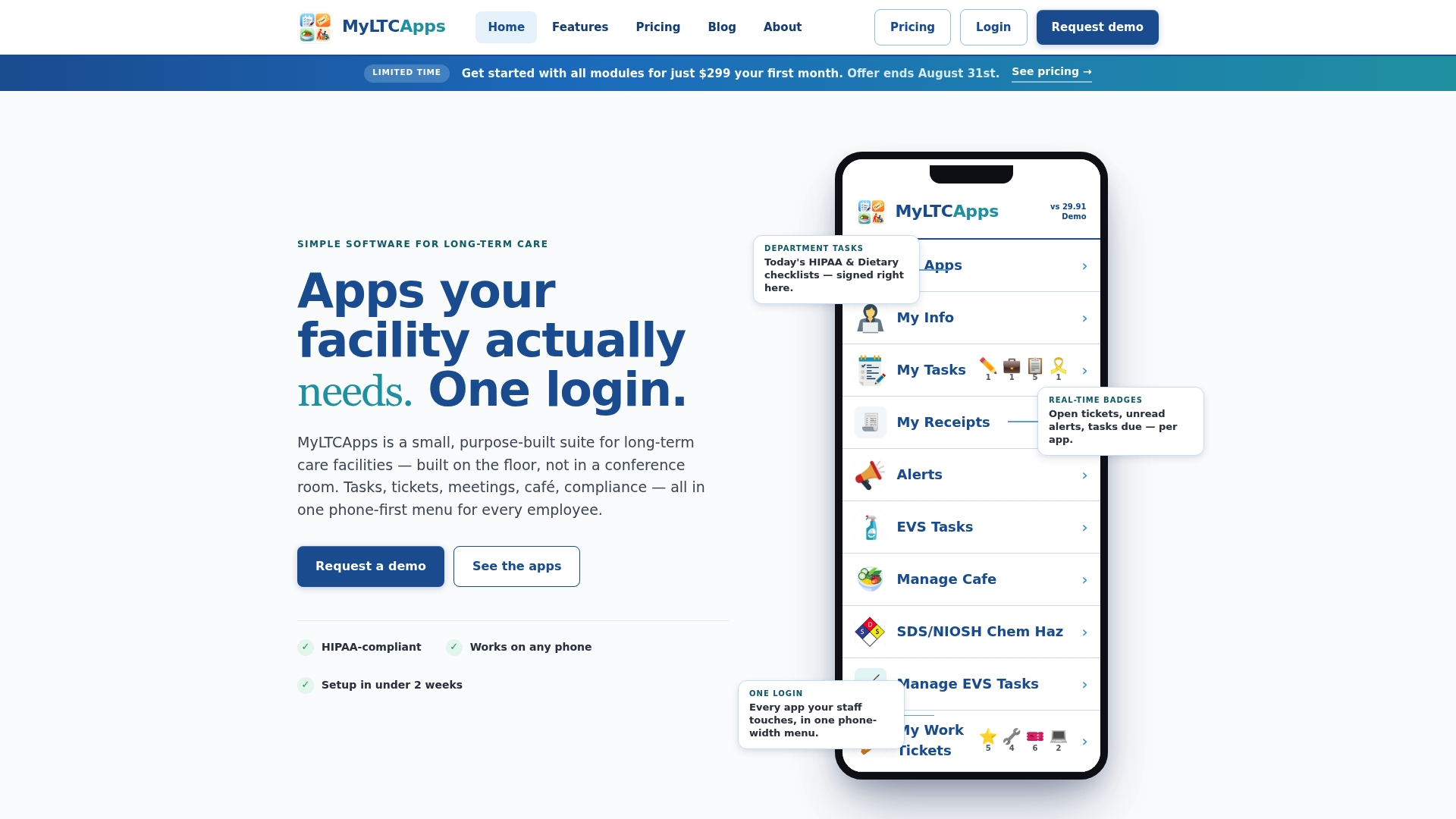
With Myltcapps, compliance checklists and incident reporting live in the same mobile interface staff already use for daily tasks, so a skin tear entry doesn’t require switching systems or hunting for a paper form. Work tickets can be generated automatically when a root-cause review flags an environmental fix, like a padded rail or repaired furniture edge. Reports export in a format ready for surveyor review, without staff needing to reformat anything by hand. Myltcapps does not include medical charting. It supports the operational side: task assignment, checklist completion, alerts to the right staff member, and dashboards that show patterns across shifts and units.
If your facility is still relying on paper incident forms or spreadsheets to track skin tears, start with the compliance checklist and task tools and see how a mobile-first incident form changes reporting completeness within a few weeks.

Authoritative Resources to Download and Cite
For clinical reference and staff training, these are the primary documents behind the recommendations in this article:
- ISTAP Best Practice Recommendations (2nd Edition): the updated guideline covering classification, prevention, and the validated DC-Tool.
- ISTAP DC-Tool: a structured, 22-question data collection form built for clinical and quality-improvement use, detailed in the same ISTAP release above.
- Wounds International toolkit overview: a practical summary of prevention pathways, risk assessment, and product selection guidance.
- LeBlanc et al., peer-reviewed review: the evidence synthesis behind ISTAP classification and standardized documentation recommendations.
This article is general information, not a substitute for advice from a qualified doctor. Consult a qualified healthcare professional about your own circumstances before acting on anything here.
Sources
- LeBlanc et al., PMC review
- ISTAP announcement: Best Practice Recommendations (2nd Edition)
- Wounds International — Best practice recommendations for prevention and management of skin tears (overview)