OSHA Audit Ready: Healthcare Exposure Control Plan Template for LTC
OSHA Audit Ready: Healthcare Exposure Control Plan Template for LTC
OSHA requires every employer with staff who face occupational exposure to blood or other potentially infectious materials to maintain a written Exposure Control Plan under 29 CFR 1910.1030. The plan’s job is to eliminate or minimize that exposure, and it must contain specific components: an exposure determination, methods of compliance, hepatitis B vaccination and post-exposure follow-up procedures, employee communication and training, and recordkeeping.
TL;DR:
- An exposure control plan must include an exposure determination, compliance methods, vaccination and follow-up procedures, training, recordkeeping, and incident evaluation, or it will fail inspection.
- OSHA requires task-based exposure determination without considering PPE, and annual plan updates must document device considerations and staff input to stay compliant.
- Engineering and work-practice controls must be implemented before providing PPE, with routine device inspections and logs essential for verification during surveys.
- Training must be provided at initial assignment, annually, and whenever job procedures change, with vaccination offered within 10 days and records kept for at least 3 years.
- The plan should be treated as a living document, updated immediately upon changes, with digital tools recommended to facilitate audit readiness and ongoing compliance management.
Table of Contents
- Who Needs an Exposure Control Plan for Healthcare Work?
- What Must an Exposure Control Plan Include Under OSHA?
- Which Compliance Methods Come Before PPE?
- When Is Training and Hepatitis B Vaccination Required?
- How Long Do You Keep Exposure Control Plan Records?
- How Often Should You Update the Exposure Control Plan?
- Quick Checklist and Template for an Audit-Ready ECP
- Running the ECP Day to Day in a Long-Term Care Facility
- What Compliance Managers Get Wrong About the ECP
- Keeping Your Exposure Control Plan Audit-Ready With MyLTCApps
- Sources
Who Needs an Exposure Control Plan for Healthcare Work?
“Occupational exposure” means reasonably anticipated skin, eye, mucous membrane, or needlestick contact with blood or other potentially infectious materials while performing job duties. In healthcare, that covers far more roles than most administrators initially list.
- Nurses and nursing assistants performing wound care or specimen collection
- Phlebotomists and laboratory technicians handling blood draws
- Housekeeping and environmental services staff cleaning patient rooms and bathrooms
- Maintenance staff who service equipment that contacts bodily fluids
Exposure determination has to be task-based, and OSHA explicitly requires it be done without regard to personal protective equipment. You identify job classifications, list the specific tasks tied to exposure risk, then mark whether all employees in that classification are exposed or only some. Document the whole exercise in a table or appendix inside the ECP itself, not in a separate file no one can find during a survey.
What Must an Exposure Control Plan Include Under OSHA?
The regulation lists a fixed set of minimum elements, and a written plan missing any one of them fails inspection regardless of how good the rest looks.
- Exposure determination identifying affected job classifications and tasks
- A schedule and method for implementing methods of compliance (engineering controls, work practices, PPE, housekeeping)
- Hepatitis B vaccination availability and confidential post-exposure evaluation and follow-up
- Communication and training procedures for affected employees
- Recordkeeping procedures, including training logs and the Sharps Injury Log
- Procedures for evaluating the circumstances of exposure incidents
Every employee with occupational exposure must be able to access the plan, and OSHA requires review and update at least annually.
Annual documentation gap: OSHA’s own guidance flags missing device-consideration documentation and absent frontline solicitation records as two of the most common findings during bloodborne pathogen inspections. A plan that exists but was never updated with dated evidence of both steps still counts as noncompliant.
That annual update isn’t optional paperwork. It has to show you considered safer medical devices that came onto the market that year, and it has to show you asked non-managerial, direct-care staff for their input before choosing.
Which Compliance Methods Come Before PPE?
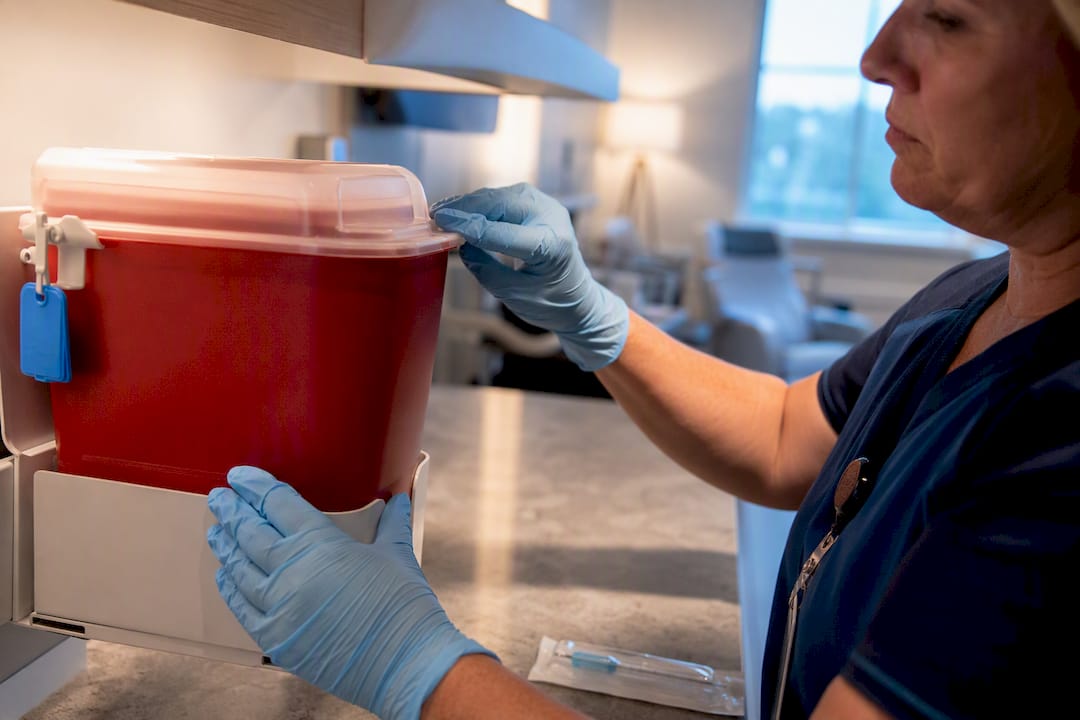
OSHA’s hierarchy is explicit: engineering and work-practice controls come first, personal protective equipment second, and housekeeping runs alongside both. Engineering controls remove the hazard at the source. Think needleless IV systems, safety-engineered sharps with self-sheathing needles, and wall-mounted sharps containers placed within arm’s reach of every point of use.
Work-practice controls change how staff behave around a hazard that engineering controls can’t fully eliminate.
- No two-handed recapping of needles, ever
- Sharps disposed of immediately at the point of use
- Handwashing immediately after glove removal and after any contact with blood or OPIM
- Contaminated equipment labeled and handled per facility protocol
PPE is the employer’s responsibility to provide, fit correctly, and repair or replace at no cost to the employee. Housekeeping runs on a written schedule for decontaminating surfaces and equipment, not an “as needed” habit that nobody logs.
Pro Tip: Keep a simple device inspection and replacement log alongside your ECP. When a surveyor asks how you verified sharps containers were never overfilled or safety needles were functioning, a dated log answers the question in seconds instead of forcing you to reconstruct memory on the spot.
For facilities managing environmental services staff, a structured housekeeping checklist for nursing home managers helps turn that schedule into something staff actually follow.
When Is Training and Hepatitis B Vaccination Required?
Training timing follows a clear pattern under OSHA’s standard, and it applies whether the employee is brand new or has worked the floor for a decade according to this practical compliance checklist for dental offices.
- Provide training at initial assignment, before any task involving potential exposure begins.
- Repeat training at least annually, and tailor the refresher to new procedures, equipment, or risks rather than re-teaching identical material every year.
- Add task-specific training immediately whenever job duties or procedures change in a way that affects exposure risk.
Training records need to include dates, content summaries, and trainer qualifications. The hepatitis B vaccine must be offered to every employee with occupational exposure within 10 working days of their initial assignment, at no cost, unless they’ve already been vaccinated or documented as immune. If an exposure incident happens anyway, the employer must provide confidential medical evaluation, source testing where legally permitted, and follow-up care through a licensed healthcare professional.
How Long Do You Keep Exposure Control Plan Records?
Recordkeeping under 29 CFR 1910.1030 splits into distinct categories, each with its own retention rule.
- Training records: kept for 3 years from the training date
- Medical records: retained per 29 CFR 1910.1020, generally duration of employment plus 30 years
- Sharps Injury Log: records the device type, work area, and how the incident occurred, without identifying the injured employee by name
- ECP revision history: dated versions showing what changed and when
Employees have a right to request copies of their exposure records, and the ECP itself must be accessible to any employee at any time, in hard copy or an electronic format they can actually reach on shift. Store the live plan in one location, version every update, and keep prior versions rather than overwriting them.
How Often Should You Update the Exposure Control Plan?
The ECP needs review at least once a year, and again immediately whenever new tasks, positions, or procedures change exposure risk, not on the anniversary date alone. Waiting for the calendar to trigger a review is one of the more common gaps OSHA inspectors flag in healthcare settings.
Two documentation pieces get missed most often: proof you considered commercially available safer devices that year, and proof you solicited input from non-managerial, direct-care staff before selecting them. A committee meeting note isn’t enough. Document who was asked, how their input was collected, and why the chosen device won out.
- Date of review
- Summary of what changed and why
- Names or roles of staff solicited for input
- Next scheduled review date
Pro Tip: Tie ECP updates to your change-management process instead of your calendar. The moment a new device or procedure gets approved, trigger a plan revision the same week, not at the next annual cycle.
Quick Checklist and Template for an Audit-Ready ECP
A compact self-check against OSHA’s core sections catches most gaps before a surveyor does.
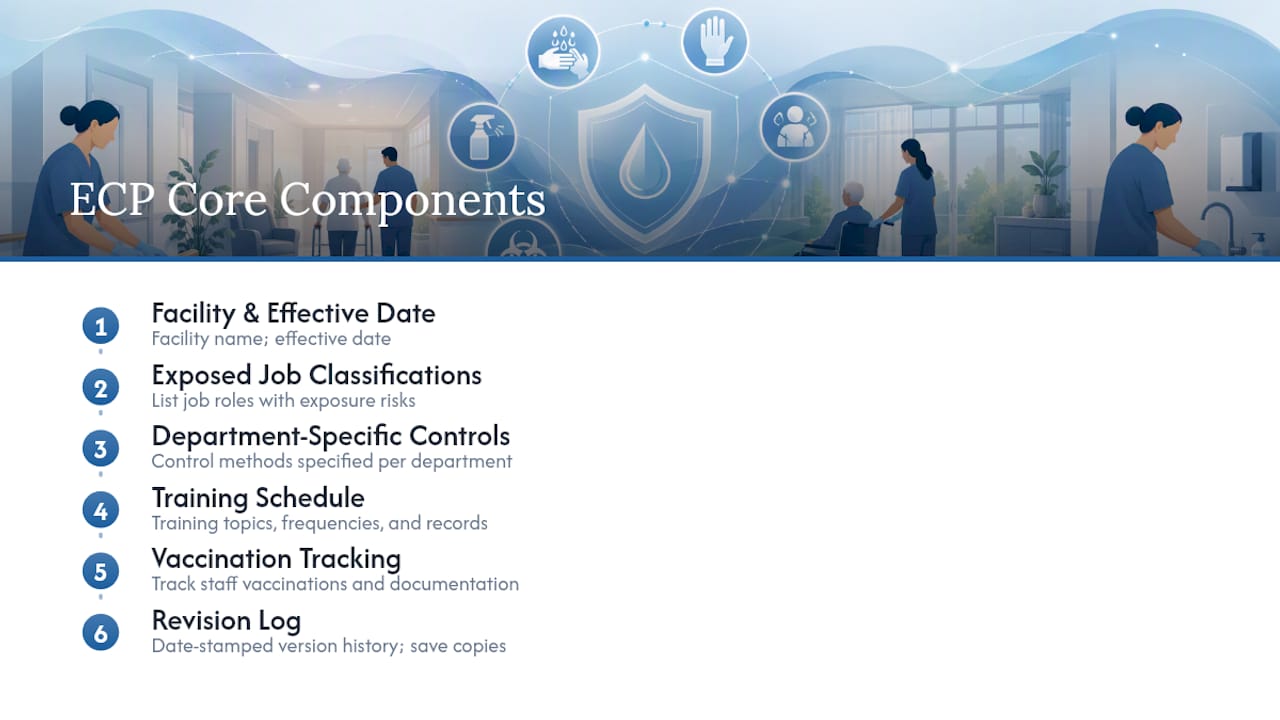
For a starting template, fill in fields for facility name, effective date, job classifications with exposure, control methods by department, training schedule, vaccination tracking, and a revision log table. NIOSH’s model exposure control plan materials give a solid structural starting point administrators can adapt rather than build from scratch. Save every version with a date stamp, and keep the working copy accessible on the floor, not locked in an administrator’s inbox.
Running the ECP Day to Day in a Long-Term Care Facility
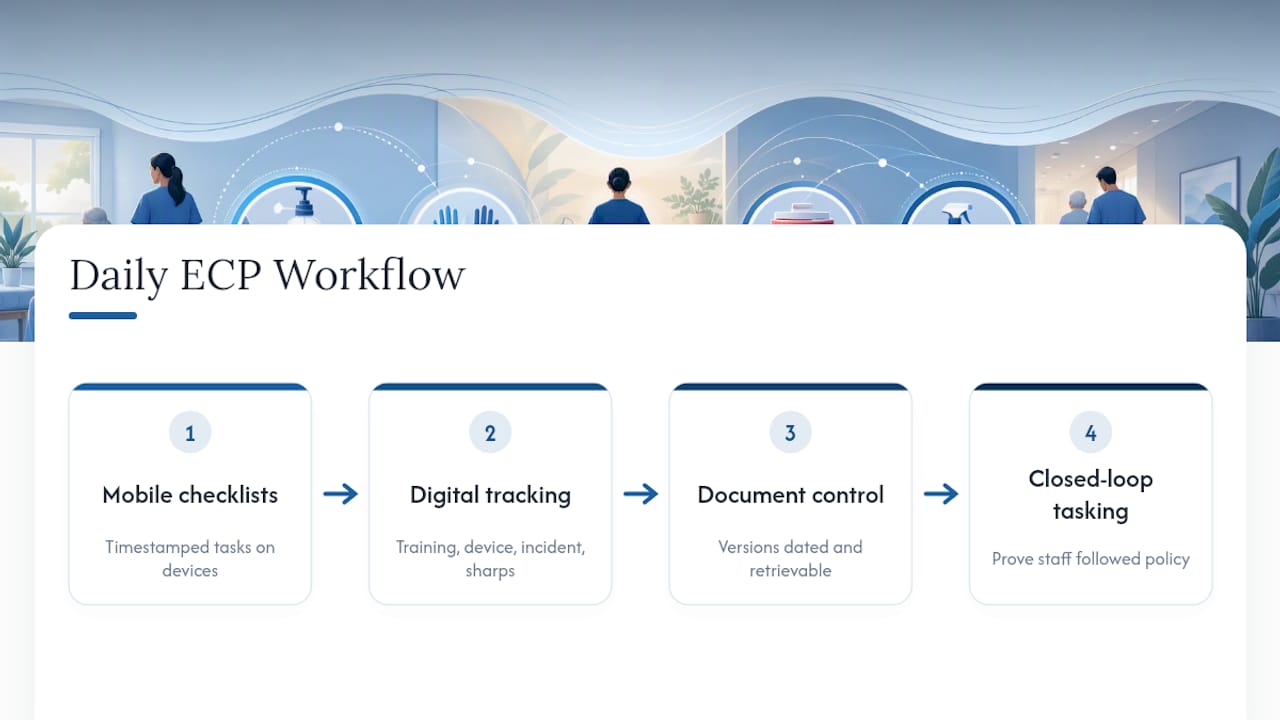
A written plan only works if the daily tasks behind it actually get done and get proven. Mobile checklists turn training deadlines, vaccination offers, and sharps-log entries into tasks staff complete on their own devices, with a timestamp attached automatically.
Items that benefit most from digital tracking include training completion records, device-evaluation revision logs, incident documentation, and Sharps Injury Log entries. A document control system built for healthcare keeps every ECP version dated and retrievable instead of scattered across email threads and printed binders. Closed-loop tasking closes the gap between “we have a policy” and “we can prove staff followed it,” which is exactly what a surveyor is checking for.
What Compliance Managers Get Wrong About the ECP
The biggest mistake isn’t ignorance of the standard. It’s treating the ECP as a document you file once a year instead of a living record you touch every time something changes. Update it the week a new safety device rolls out, not at the next annual review. Document who you asked for input, not just that a decision got made. Keep dated versions instead of overwriting the last one.
Run your compact checklist quarterly, not annually. Surveys don’t wait for your calendar, and neither should your paperwork.
— Philip
Keeping Your Exposure Control Plan Audit-Ready With MyLTCApps
There are software platforms that help long-term care administrators run the checklist-based work an ECP demands: training completions, incident reports, and dated document versions, without chasing paper across shifts and departments.
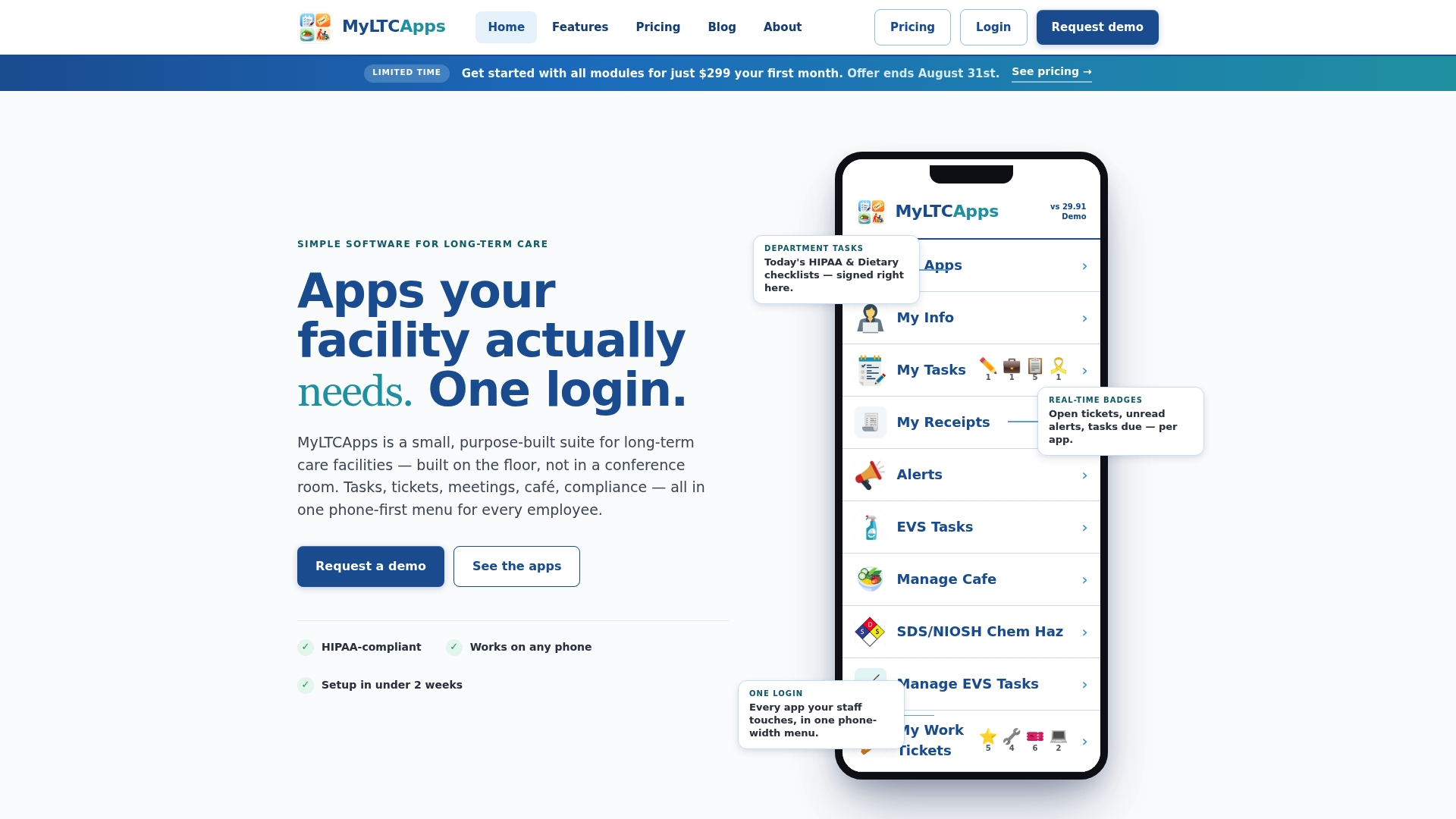
A facility can pull a training completion report ahead of a survey in minutes instead of reconstructing it from binders, and export a searchable log of incident entries when a surveyor asks for evidence rather than a summary. The platform’s compliance task and checklist software closes the loop between assigning a task, like a sharps container inspection or an annual device review, and proving it happened on the date it was supposed to. Facilities also managing environmental services schedules can pair that with EVS task tracking to keep housekeeping and decontamination logs in the same system as everything else. If your ECP still lives in scattered spreadsheets and a binder in the administrator’s office, consider using a digital checklist system to streamline quarterly compliance reviews and maintain timestamped records.
Sources
- 1910.1030 - Bloodborne pathogens. | Occupational Safety and Health Administration
- Protect Your Employees with an Exposure Control Plan | NIOSH (CDC)